

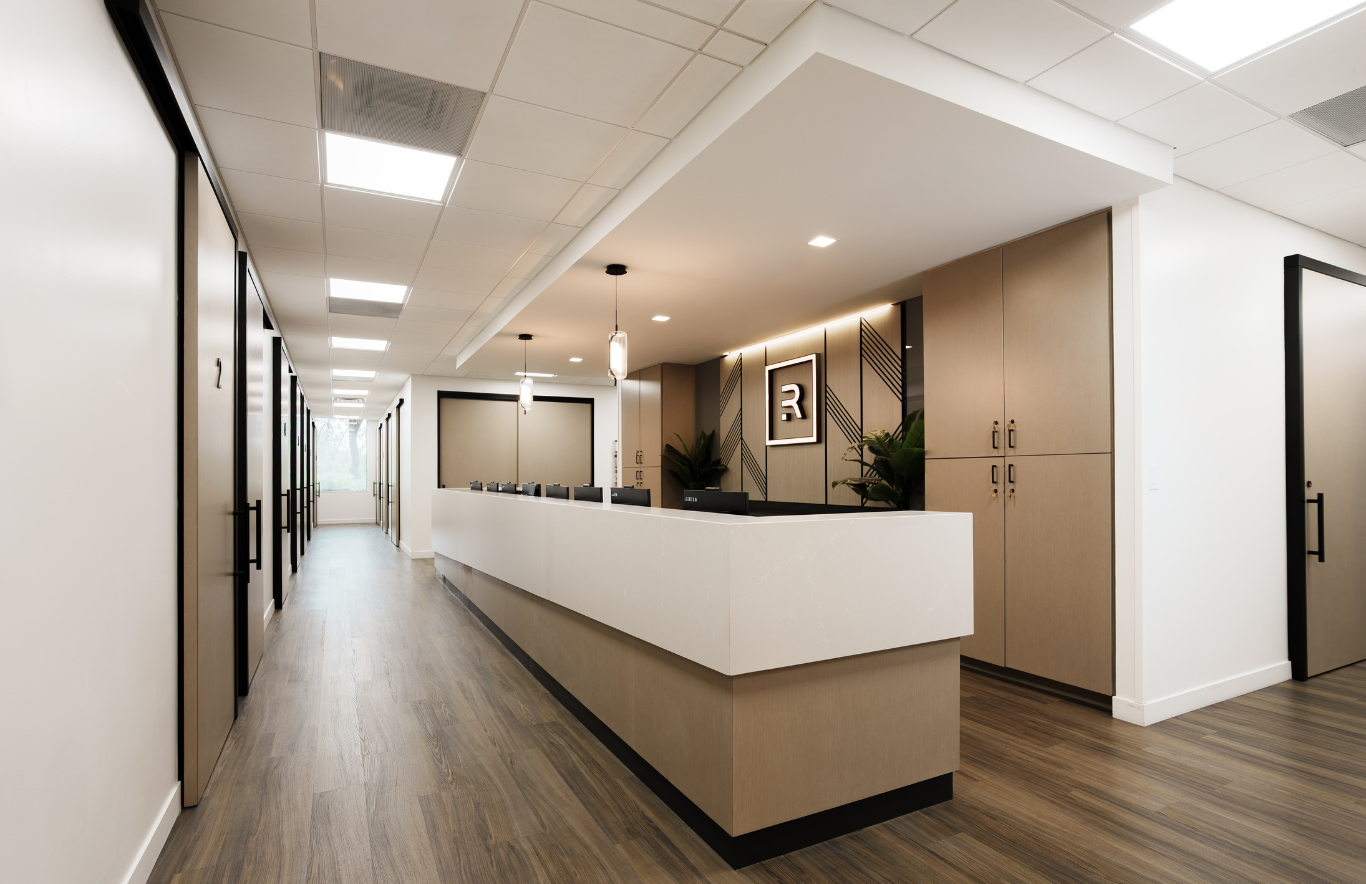
Major corridors at Revelus Dermatology are anchored by windows to reduce the enclosed, maze-like feeling common in many healthcare offices and help patients remain oriented throughout their visit. | Photo Credit (all): Courtesy of S. Tipton Studios, Revelus Dermatology
By Christie Schultz, NCIDQ, RID, and Daniel Soteldo
Modern dermatology practices often combine medical care, cosmetic services and retail offerings under one roof. Supporting those functions successfully requires more than an attractive space. It requires operational planning long before construction begins. As practices continue expanding beyond traditional clinical care, many are rethinking what a dermatology office should feel and look like. Patients increasingly expect spaces that feel welcoming, elevated and easy to navigate rather than cold or institutional.
That shift creates a new challenge for healthcare providers and design teams: how do you balance a hospitality-driven patient experience with the operational efficiency and clinical functionality required in a medical environment?
At Revelus Dermatology in Austin, Texas, the project team approached those priorities simultaneously rather than sequentially. From the earliest planning stages, workflow, patient comfort and brand identity were all considered together, helping create a space that supports multiple service lines within one cohesive environment.
Before the First Hammer Swing
Some of the most important operational decisions in a healthcare build-out are often made too late. A supply closet may not be accessible to the areas that need it most. A treatment room may not have the right storage. Equipment may technically fit, but interrupt staff workflow once the clinic opens.
Waiting to finalize equipment placement, storage needs and circulation until construction is underway can make changes far more disruptive and expensive.
During the planning phase of Revelus Dermatology, the project team mapped operational workflows and equipment needs, from medical equipment down to trash cans. Exam room layouts, millwork, storage locations, technology requirements and support spaces were coordinated early to help the clinic function efficiently from day one.
This level of coordination is more commonly associated with laboratories and procedural environments, where every piece of equipment must be carefully accounted for before walls are framed. Applying a similar planning approach to a specialty clinic helped ensure the space could support multiple service lines while maintaining operational efficiency within a relatively compact footprint.
Early coordination also created flexibility for future growth. The clinic was designed to accommodate evolving services without requiring major renovations as the practice expands.
Designing Patient Flow, Not Just Floor Plans
Patient experience extends beyond provider interactions and clinical outcomes. The way a patient moves through a space can significantly influence how comfortable and confident they feel during their visit.
Confusing layouts, dead-end corridors and limited access to daylight can contribute to the disorienting, maze-like feeling common in many healthcare environments. In specialty clinics where patients may already feel anxious or overwhelmed, intuitive circulation becomes an important part of the overall experience.
At Revelus Dermatology, the existing suite presented a unique challenge: a stairwell positioned directly in the middle of the space. Rather than forcing the plan into a traditional corridor layout, the design team used the stairwell to help divide public and private zones, improving circulation and helping patients navigate the space more intuitively throughout their visit.
Natural light was also a major priority. To strengthen the connection to the outdoors and improve wayfinding, major corridors were designed to terminate at windows whenever possible. These visual anchors help patients maintain a sense of place while reducing the enclosing feeling often associated with medical offices.
These decisions may appear subtle from a design perspective, but they can have a significant impact on how people experience a healthcare environment. They are also some of the most difficult elements to change once the project moves into construction.
Balancing Hospitality and Clinical Function
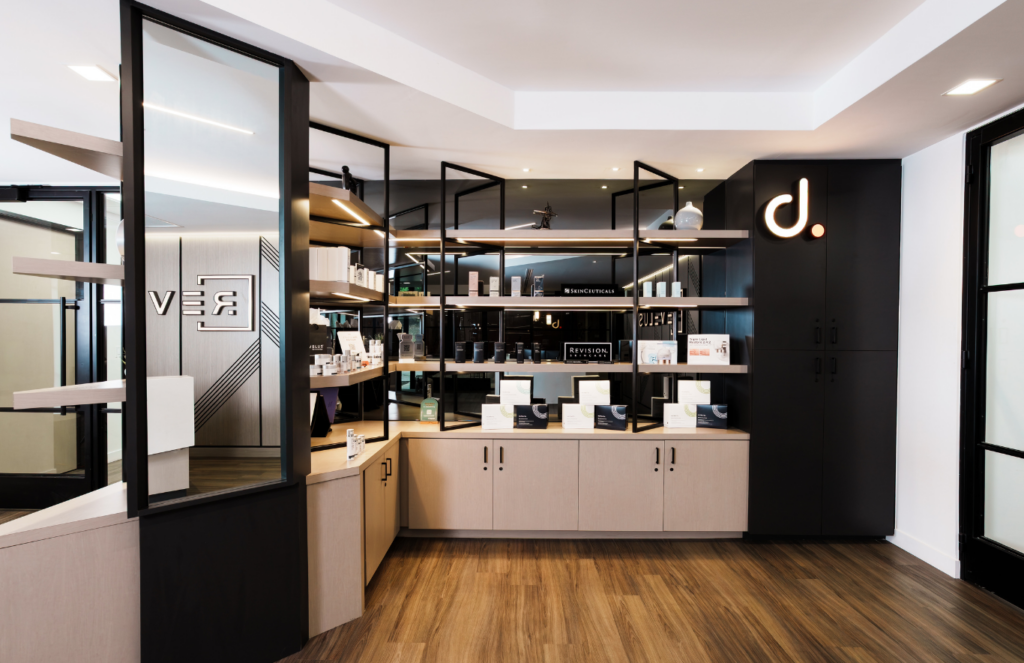
As specialty healthcare practices evolve, many are balancing a broader mix of services and patient expectations within a single environment simultaneously. Revelus Dermatology needed to support clinical care, aesthetic treatments and retail skincare sales simultaneously.
Material selections, lighting, circulation and retail displays were evaluated not only for appearance, but also for how they supported staff workflow and the patient experience. The challenge was meeting clinical requirements while creating a space that felt welcoming, elevated and aligned with the practice’s brand.
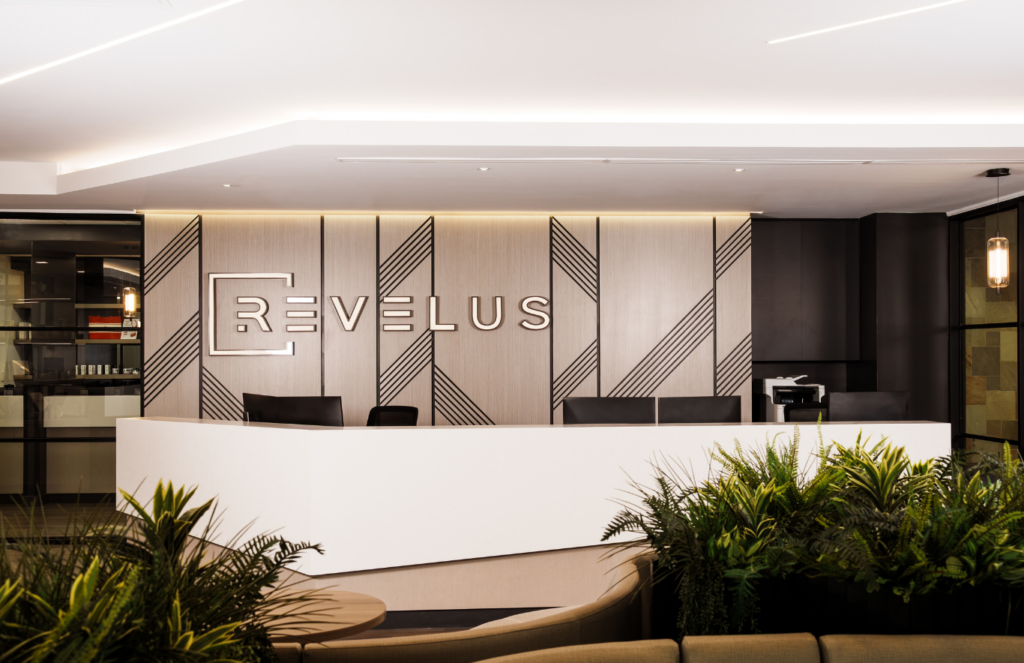
Several space-saving strategies helped maximize efficiency throughout the clinic. Pocket doors, side-entry doors and integrated storage solutions preserved usable square footage while improving circulation and reducing visual clutter.
Integrated cabinetry and concealed storage also helped keep printers, supplies and other operational necessities out of the patient’s direct line of sight, supporting a cleaner and more hospitality-driven environment without sacrificing functionality.
In specialty practices that mix healthcare and consumer-facing services, every square foot must serve multiple purposes. Early planning helped the Revelus team accommodate those competing demands without compromising workflow, patient comfort or future growth.
Designing With Operators, Not For Them
Designers and architects may understand healthcare environments, but they are not the people using those spaces every day. Bringing operators and staff into the planning process can lead to better outcomes once the facility opens.
At Revelus Dermatology, the physician-owner participated directly in real-time Revit walkthroughs throughout the design development process. Rather than waiting for polished presentations, the team reviewed the evolving design together, allowing operational concerns, workflow adjustments and patient experience considerations to be evaluated and refined in real time.
This collaborative process helped identify opportunities, address concerns and build consensus from the beginning, while also allowing the design team to better understand how the practice would function day to day and incorporate those insights into the final environment.
Digital visualization tools are making this level of collaboration more accessible, enabling healthcare providers to engage with their future spaces long before walls are framed or finishes are installed.
Going Beyond the Traditional Clinic Model
The success of a healthcare facility is not measured solely by its appearance. It is measured by how effectively the environment supports the people who use it every day.
For specialty clinics, that means thinking beyond floor plans and finishes to consider workflow, patient movement, future growth from the earliest stages of planning.
The most important operational decisions are often made before construction begins. By aligning operators, designers and builders early, healthcare organizations can create spaces that support staff, adapt to changing needs and make it easier for patients to navigate care long after opening day.
Christie Schultz, NCIDQ, RID, is Associate Director of Commercial Interiors at S. Tipton Studio. Daniel Soteldo is Chief Operating Officer at Revelus Dermatology.