

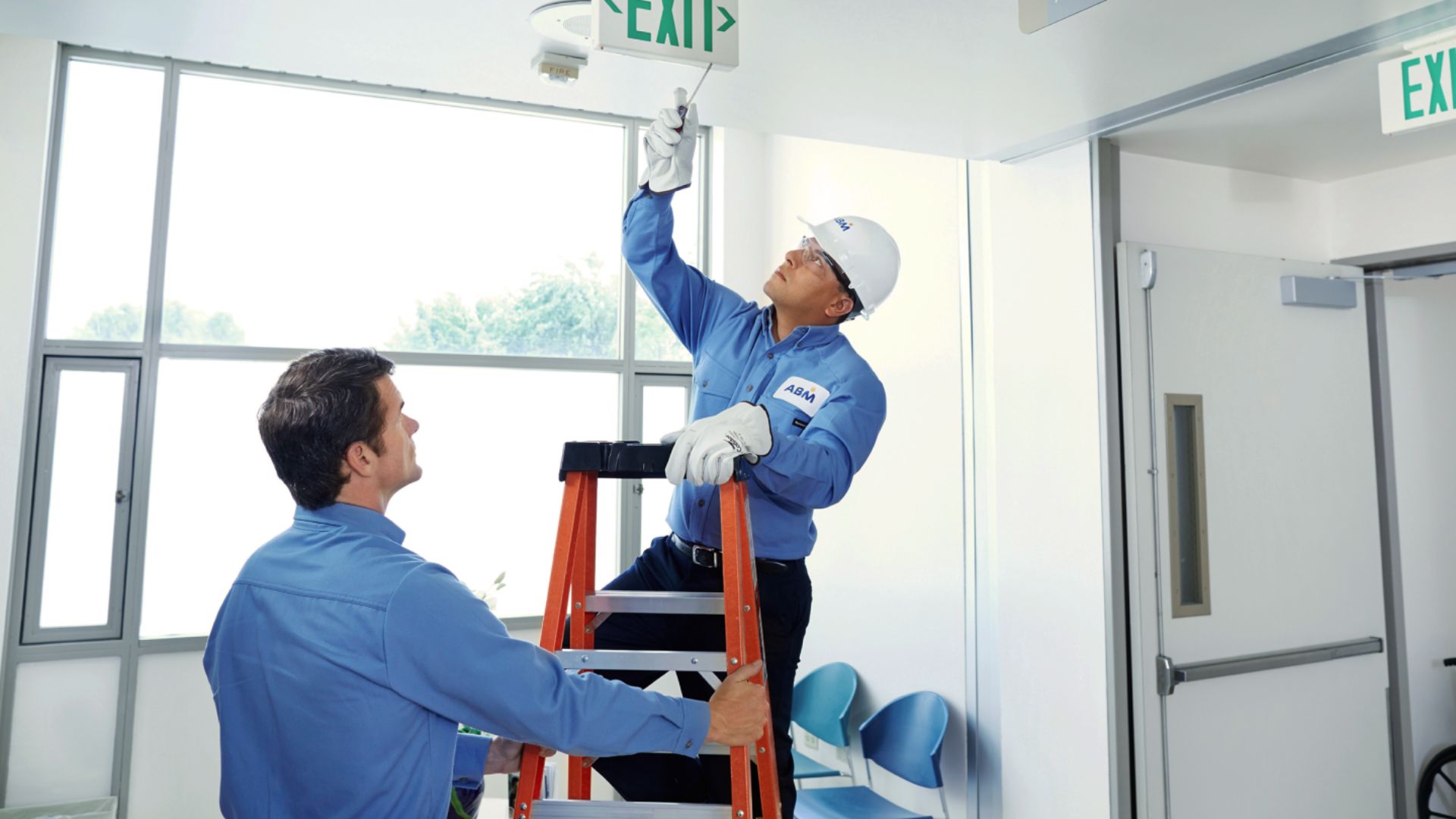
When safety becomes the foundation of the culture, the organization moves beyond basic compliance toward high performance. | Photo Credit: Courtesy of ABM
By Lindsey Coulter
Michael Ream is a Director of Sales for Enterprise and Healthcare Solutions at ABM, where he draws on nearly 18 years of experience across healthcare operations, environmental services, medical equipment and infrastructure development. He began his career as a janitorial supervisor and advanced through operational leadership roles supporting healthcare facilities and environmental services across the Midwest.

Today, Ream focuses on enterprise-wide solutions for healthcare clients, combining operational expertise with strategic business development. He holds an MBA and an Infection Prevention certification from the American Hospital Association.
In this Q&A, Ream discusses the evolving relationship between infection prevention, regulatory compliance, workforce stability and organizational culture—and why proactive safety practices can be more effective than reacting to deficiencies after they occur.
Hear more from Ream and fellow ABM experts Brian Maiden, Engineering Manager, and Chris Giannotta, Director of Sales for Enterprise and Healthcare Solutions, at the free webinar “Beyond the Hospital: Facility Compliance Challenges in Non-Acute Healthcare” Sept. 1 at 9 a.m. PST.
Q: How have compliance expectations changed over the last two decades?
Michael Ream: There will always be new and emerging pathogens. Our understanding of those pathogens—and how they are transmitted from host to host—will continue to evolve.
COVID-19 is a good example. Our response evolved from initially comparing it to the flu, to implementing social distancing, masking and extensive disinfection protocols, and then adapting those practices as our understanding of the virus changed. That demonstrated how quickly healthcare organizations must respond to emerging information.
We have seen a similar evolution in life safety and building operations. The industry has moved away from a “replace it when it breaks” mentality toward preventive and increasingly predictive maintenance. The goal should be to develop a preventive and predictive state of mind across the organization.
Surveys should be more than checking a compliance box. They reinforce best practices in infection prevention, life safety and building maintenance. When those practices are part of everyday operations, organizations remain continuously prepared rather than scrambling when a surveyor arrives.
Q: How closely connected are infection prevention and regulatory compliance?
Ream: The goal should always be for patients to leave a healthcare facility in better health than when they entered.
Healthcare-associated infections remain a serious threat to that goal. According to the CDC, on any given day, approximately one in 38 hospital patients has at least one healthcare-associated infection.
At its core, regulatory compliance is about patient and staff safety. We have a duty to protect patients, colleagues and everyone who enters the healthcare environment. For that reason, infection prevention and regulatory compliance are completely intertwined.
When organizations follow, and seek to exceed, recommended best practices from organizations such as APIC, the CDC and AORN, compliance becomes a natural outcome. More importantly, patients and staff are safer.
Q: Where do organizations struggle to build accountability around compliance?
Ream: One of the clearest examples is hand hygiene. It can be difficult for employees to see something and feel comfortable saying something, particularly when workplace hierarchies are involved.
I once witnessed a physician yell at a nurse in front of a patient after the nurse reminded him that he needed to wash his hands when entering the room. The physician then reported the nurse to administration. During the follow-up meeting, the Chief Nursing Officer did an excellent job of removing titles, hierarchy and personal dynamics from the conversation. She brought the discussion back to what mattered: keeping patients and staff safe. The physician ultimately acknowledged that his actions went against policy and established best practices.
That experience reinforced an important lesson: no person’s title, authority or responsibilities place them above the fundamental goal of patient wellness and safety. A true culture of accountability exists when every employee, regardless of position, is expected and empowered to speak up when safety is at risk.
Q: What impact does workforce instability have on compliance?
Ream: The impact is massive. In environmental services, the majority of the budget is labor. However, the solution is not simply to reduce staffing. The key is to recruit and retain great people who are well compensated, well coached, properly equipped and connected to a larger purpose.
Employees need to see themselves as more than housekeepers, maintenance technicians or support staff. They should see themselves as caregivers and essential members of the broader patient-care team.
When employees receive the right training and resources—and feel heard, respected and connected to a purpose—they produce better results. Lower turnover creates greater consistency, and greater consistency produces better quality and efficiency.
Q: How can healthcare leaders become more proactive instead of reactive?
Ream: There is an important difference between compliance and commitment. Compliance means, “I will do what I have to do to meet the minimum requirement.” Commitment means, “I am bought in, and I am here to help complete the mission.”
Becoming proactive is ultimately about creating the right culture. Leaders can wear themselves out trying to write enough rules to keep everyone compliant. A stronger approach is to establish a clear culture, a shared goal and a genuine understanding of the organization’s mission, vision and values.
Training people on the “why” is critical. Employees need to understand that a process is not being followed merely because leadership wants it or because a policy requires it. It is being followed because it protects patients, coworkers and themselves.
That understanding creates commitment, which motivates people to identify risks earlier and develop proactive, preventive and predictive solutions.
Q: What is one practical step organizations can take today?
Ream: Organizations need to create, reinforce and continually drive the right culture. Training should never become a check-the-box exercise. Every process and every decision should begin with safety in mind.
When safety becomes the foundation of the culture, the organization moves beyond basic compliance toward high performance. Compliance should not be viewed as an “A” rating. Meeting the minimum standard is closer to earning a “C.” An “A” means people are working ahead, anticipating risks and preventing future issues.
In a high-performing organization, compliance is not the primary activity. It is the natural result of people consistently doing the right things every day.