

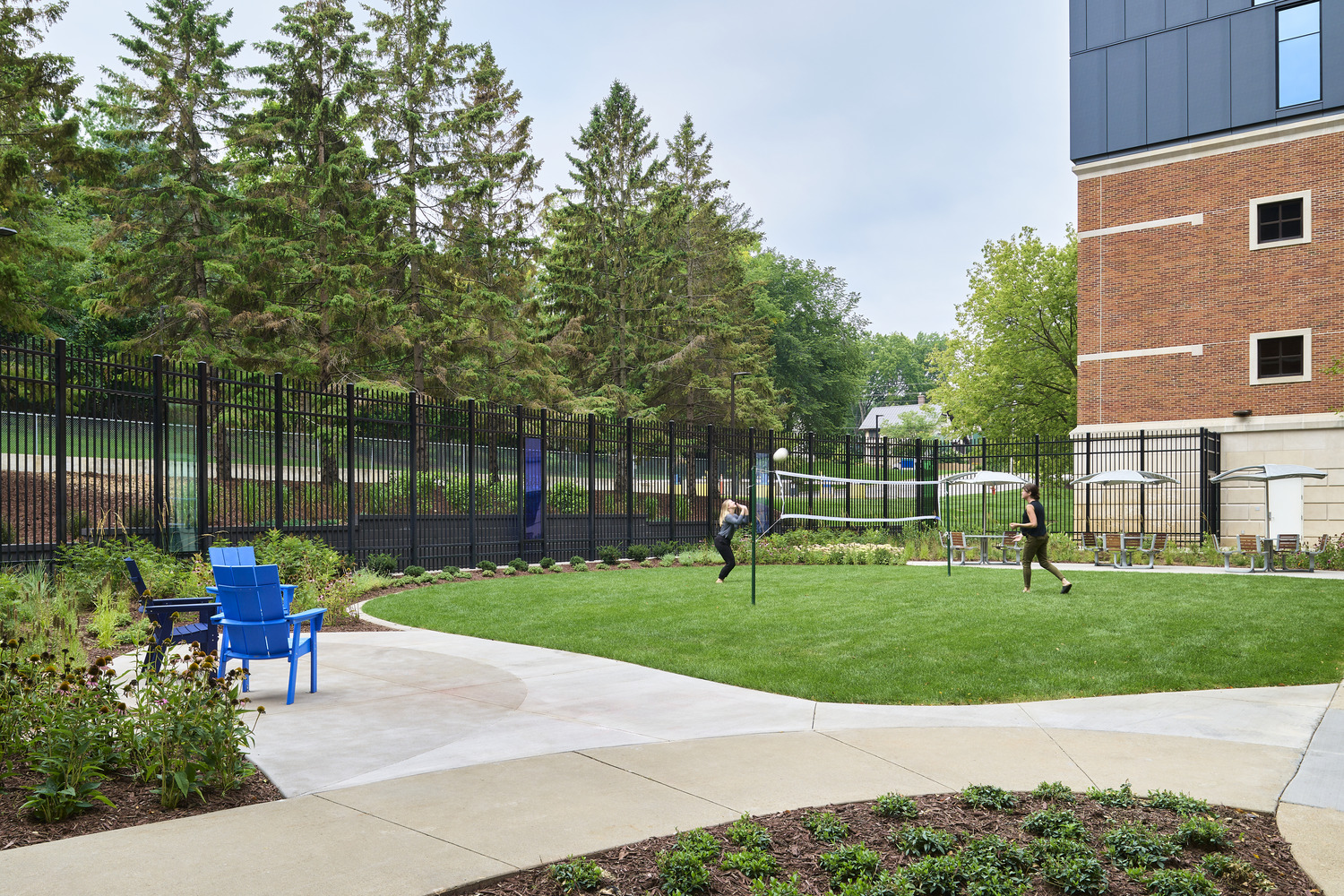
Mayo Clinic Rochester provides secure outdoor space that balances safety with healing and comfort, supporting both active and quiet outdoor activities in a beautiful, landscaped environment. | Photo Credit: VONDELINDE, courtesy of BWBR
By Melanie Baumhover, AIA, LEED AP
In Part I of this Designing Beyond Crisis article, the discussion explored the need to rethink behavioral health environments by shifting from crisis-driven care toward prevention, early intervention and more accessible treatment. Building on that foundation, Part II examines how the physical environment can actively support healing through thoughtful design, access to nature, greater patient autonomy and opportunities for meaningful human connection.
From reimagining outdated facilities to creating spaces that prioritize dignity and well-being, these strategies demonstrate how behavioral health design can move beyond containment to become an integral part of recovery.
Buildings Should Support Treatment, Not Fight It
Many behavioral health facilities were designed around older philosophies that emphasized surveillance, control and institutional order. Those environments often feature long corridors, limited daylight, few social spaces and layouts that prioritize observation over interaction. In many cases, providers are working in buildings that were never intended for behavioral healthcare.
Traditional medical units are designed for patients who spend much of their time in private rooms while staff circulate through the building. Behavioral health treatment depends on a different approach.
When existing facilities cannot be replaced, thoughtful design interventions can help bridge that gap. Drawing daylight deeper into the building, widening corridors, introducing smaller gathering areas and adding sensory rooms can help create environments that feel less intimidating.
A variety of settings allows people to regulate social interaction through quiet spaces, active spaces, therapy areas and calming sensory environments. Healing often depends on reducing stress rather than adding to it.
Access to Nature Is Not a Luxury
Fresh air, daylight and connections to the outdoors are often among the first amenities eliminated because they are difficult or expensive to provide in secure facilities. Extended stays become even more difficult when people lose access to basic experiences such as going outside.
Designers and caregivers increasingly view secure outdoor environments as essential therapeutic spaces rather than optional amenities. When direct outdoor access is not possible, views to nature, natural materials, artwork and carefully designed lighting can still help reduce stress and improve emotional regulation. Some facilities are also exploring culturally responsive landscapes that connect patients with local traditions and the natural world.
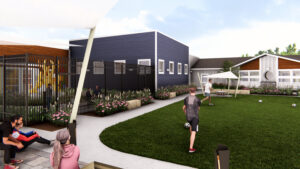
For the Great Lakes Inter-Tribal Council Adolescent Recovery and Wellness Center, planners incorporated cultural consultation into the design process to ensure that the environment reflected community values and strengthened connections to history, identity, and nature. Evidence suggests that people recover more effectively when they retain access to nature and daylight.
Dignity Is a Design Decision
Behavioral health settings have historically removed many of the choices people make in everyday life. Rigid schedules, limited privacy, institutional signage and highly controlled environments can unintentionally reinforce the feeling that patients have lost control over their own lives.
Research shows that providing choices, opportunities for exercise and spaces that feel welcoming rather than punitive contribute to better experiences and outcomes. Language matters as well. Even the signs displayed within a facility can shape how patients perceive themselves. Messaging that speaks about people rather than to them can create distance and reinforce stigma.
Caregivers and family members also need places to rest, decompress and process difficult experiences. Designing for these groups strengthens the entire care ecosystem. The goal is to create environments that recognize the humanity of everyone who enters them.
Designing for Connection
Technology will undoubtedly influence the future of healthcare. Artificial intelligence may help train staff, improve access to information or provide temporary support while patients wait for services. Yet technology alone cannot solve the behavioral health crisis. Belonging, community and meaningful human relationships remain at the center of healing. Buildings cannot replace those connections, but they can either strengthen them or stand in their way.
The future of behavioral health will depend on investments across the continuum of care, stronger partnerships, and environments designed to reduce stress, restore dignity, and encourage recovery. People seeking care are not problems to manage or crises to contain. They are individuals deserving of safety, choice, compassion, and hope, and when healthcare environments reflect that understanding, the buildings themselves become active participants in healing, designed beyond crisis.
Melanie Baumhover AIA, LEED AP, is a Principal with BWBR.