

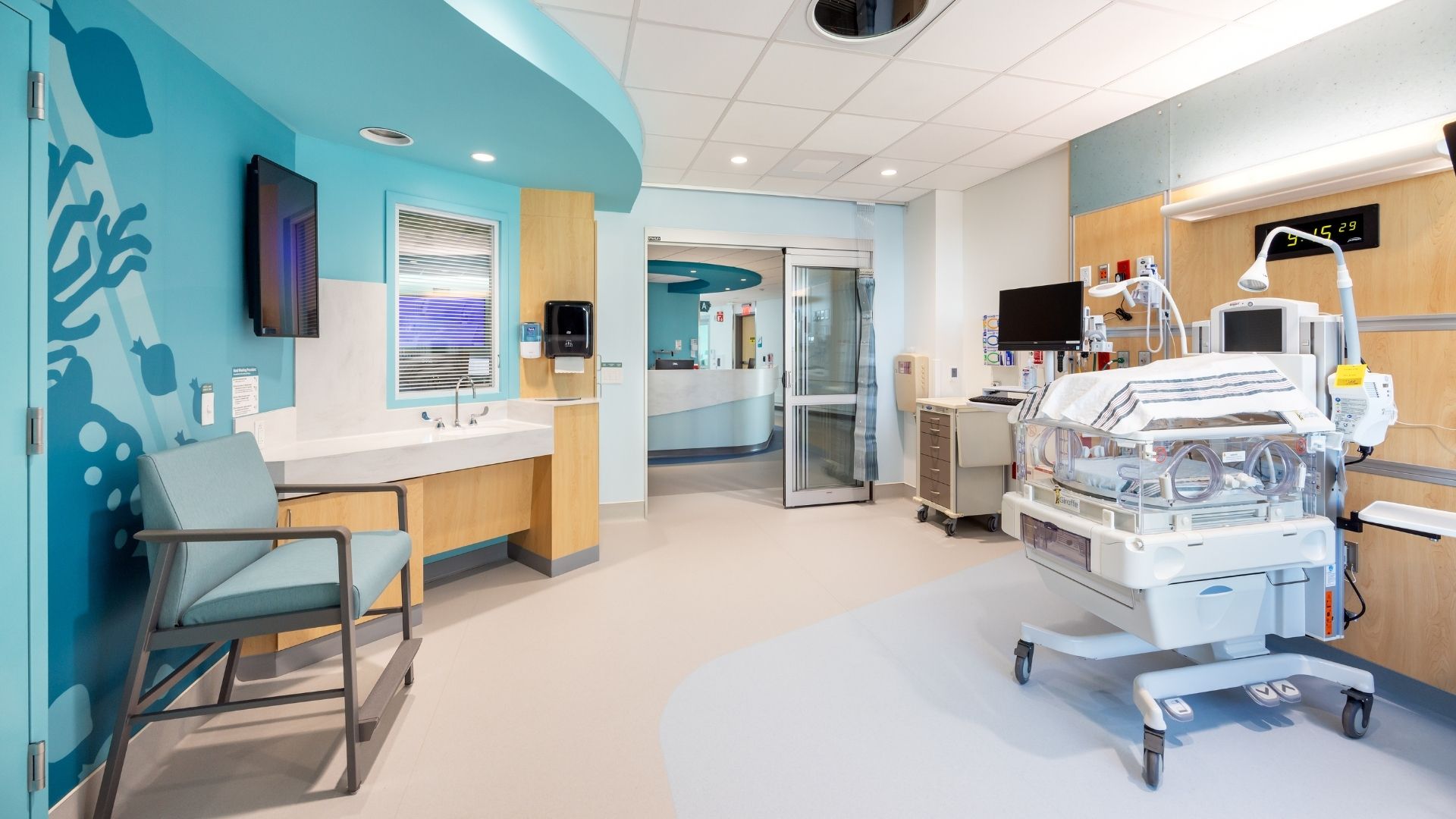
Clear sightlines, appropriate lighting, intuitive circulation and controlled access can reduce vulnerabilities while supporting staff awareness and patient movement. | Photo Credit (all): Connecticut Children’s, Warren Patterson
By Sean Ashcroft
Healthcare facilities face a complex balancing act: protecting patients, staff and visitors while maintaining open, welcoming environments for care and healing. Hospitals operate around the clock, serve people during stressful and sometimes highly emotional situations, and contain spaces with widely different levels of access, vulnerability and operational sensitivity.
As risks evolve, so do the tools used to address them. Health systems are exploring more advanced screening technologies, smarter access controls, staff duress systems and other emerging tools, often within existing facilities that were not originally built to accommodate them. Since these investments can affect patient and visitor flow, staffing, emergency response, infrastructure and the overall care experience, planning along with contracting partners can help ensure the most seamless experiences for all.
Effective security planning starts with understanding how the how the facility operates, including where vulnerabilities exist, how people move through spaces and how new measures will function during daily operations. A layered, risk-based approach can help owners strengthen security without unnecessarily creating barriers to care.
Bringing clinicians, security, facilities, IT, design, engineering, construction and technology partners together early can help owners translate security priorities into practical, maintainable investments. It also creates opportunities to anticipate infrastructure needs, test impacts to circulation and operations, and integrate future flexibility before changes become costly or disruptive.
Drawing on experience building healthcare facilities across a range of sizes and care settings, the following considerations can help owners integrate security into facility planning, design, construction and operations.
Let Operations Inform Security Investments
Security investments are most effective when they respond to how a facility actually operates. Crime Prevention Through Environmental Design, or CPTED, provides a useful foundation. Clear sightlines, appropriate lighting, intuitive circulation and controlled access can reduce vulnerabilities while supporting staff awareness and patient movement. The application should reflect each environment. Public entrances and emergency departments have different risks than NICUs, behavioral health units and other sensitive clinical spaces. Incident patterns and staff input can help teams understand where additional resources may have the greatest impact.
At Atrium Health Carolinas Medical Center’s New Bed Tower in Charlotte, N.C., currently under construction, the program includes a 62-room, pod-style emergency department and an open core inpatient nursing model intended to improve visibility. The approach demonstrates how sightlines and circulation can support safety objectives.
At Connecticut Children’s new clinical tower in Hartford, Conn., security measures progress with the sensitivity of the environment. A well-lit parking garage connects to a secure arrival path, while the tower’s 50 private NICU rooms incorporate real-time infant tracking using smart tags and automatic alerts.
Plan Screening Around Operations
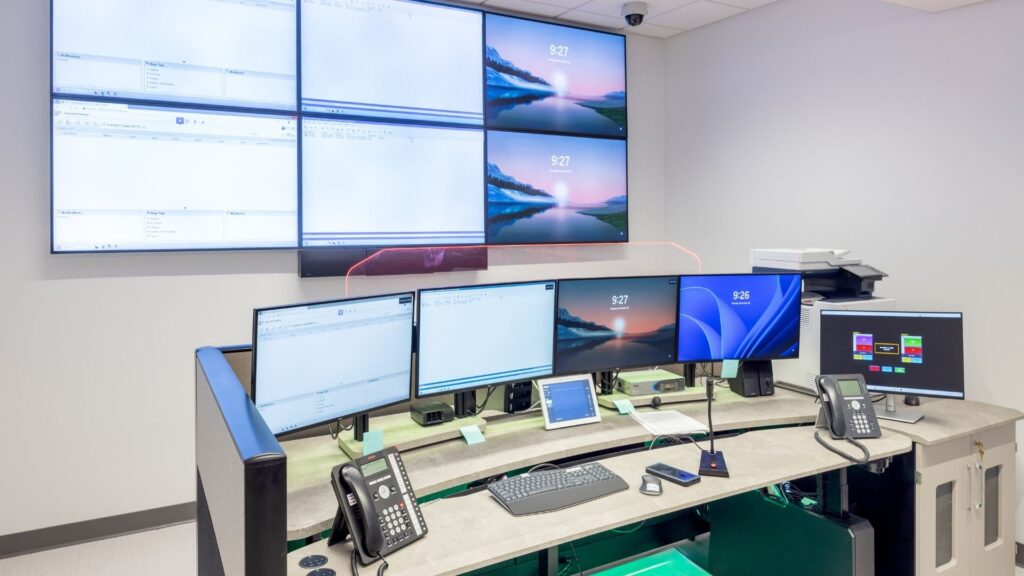
Advanced screening technology is becoming an important consideration, particularly at emergency departments and other high traffic entrances. Its effectiveness depends in part on the operations surrounding it. Teams should consider where screening occurs, how patients and visitors approach it, where people queue and what happens during peak periods. Emergency patients, visitors and staff may require different processes. Because an alert initiates a broader series of actions, staffing, escalation procedures and de-escalation training important parts of implementation.
At the 25-bed Butler Hospital Short Stay Behavioral Health Unit in Providence, R.I., security is embedded into the care environment through tamper resistant details, pressure sensitive hardware, anti-shatter and ligature resistant solutions, and sliding doors designed to reduce barricading risk. Lockable, movable partitions allow care pods to adapt for different patient populations, providing both safety and operational flexibility.
Screening systems may require power, data connectivity, network capacity and integration with cameras, access controls and other security systems. These requirements should be evaluated early to understand their effects on cost and existing building systems. Health systems can also test new approaches in selected locations and evaluate how they perform in an active care environment. Patient and visitor flow, staffing needs, response protocols and user experience can inform broader implementation.
Modernize Without Starting Over
Many healthcare organizations need to strengthen security in facilities that are already operating. Wholesale renovation may be impractical, making prioritization especially important. Security and facilities teams can evaluate entrances, lighting, sightlines, circulation and transitions between public and controlled areas alongside operating patterns. Input from clinical staff and incident data can help identify vulnerabilities that may not be apparent from drawings alone.
The contractors’ view can deliver significant value for health systems on this front. Construction partners can assess potential improvements for cost, constructability, phasing and impacts. Targeted interventions might include reconfiguring access points, screening locations, increasing visibility or adding supporting technology, with work carefully sequenced around clinical operations.
As AI-enabled and other security technologies continue to evolve, owners can also plan around capabilities instead of specific products or vendors. Providing sufficient power, pathways, data capacity, redundancy and adaptable space can make future upgrades easier to implement without major disruption.
Healthcare organizations cannot predict every security challenge ahead, but they can use operational experience to prioritize current vulnerabilities, while building flexibility for what comes next. Connecting people, technology and the built environment can strengthen security without compromising the welcoming, healing experience patients and families expect.
Sean Ashcroft is DPR Construction’s National Healthcare Core Market Leader.