

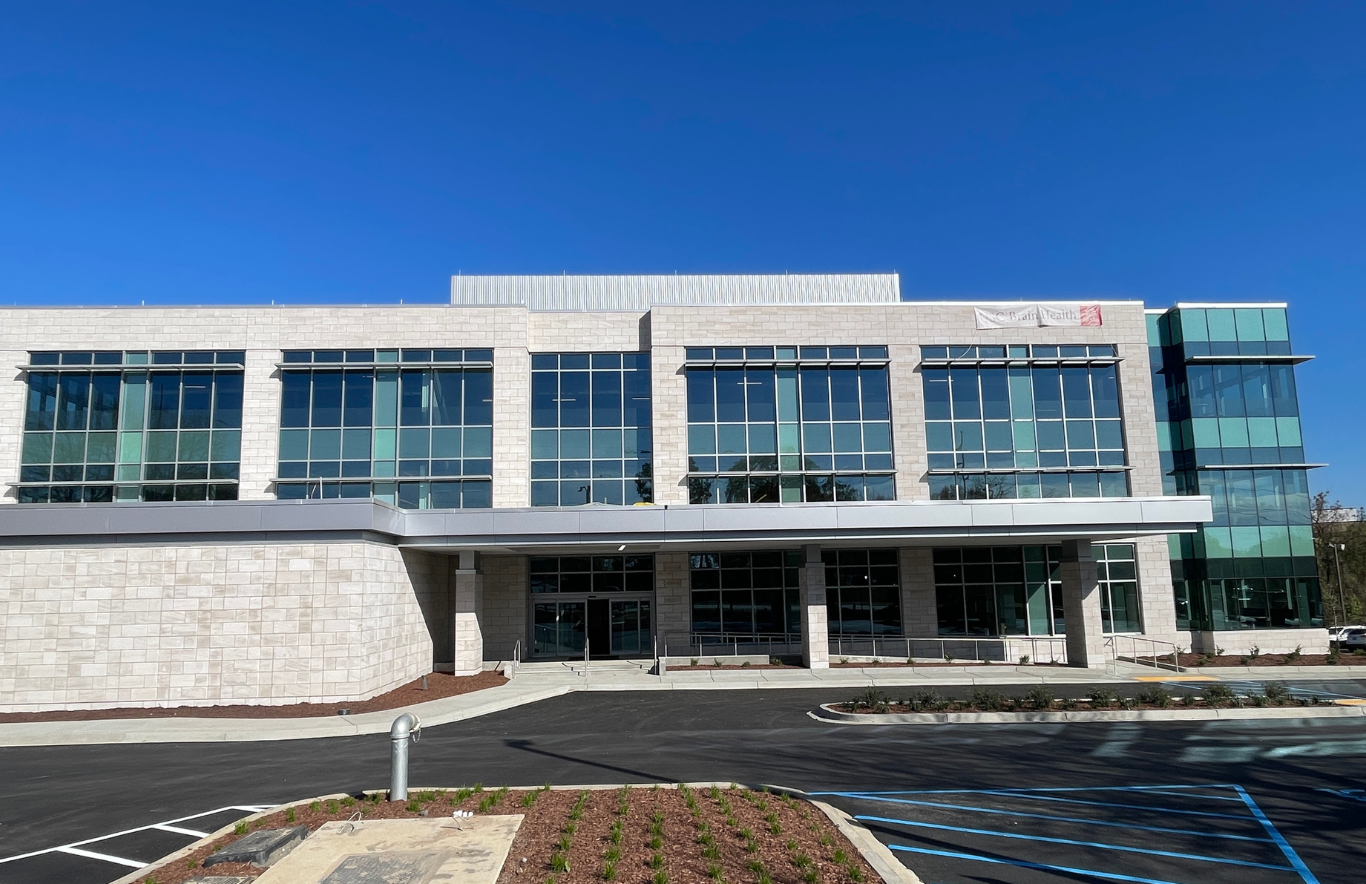
The Brain Health Center will provide timely cognitive screenings, evaluations, and community-based support services for patients in seven underserved areas across South Carolina. | Photo Credit (all): Courtesy of RMF Engineering
By Michael Scruggs, PE
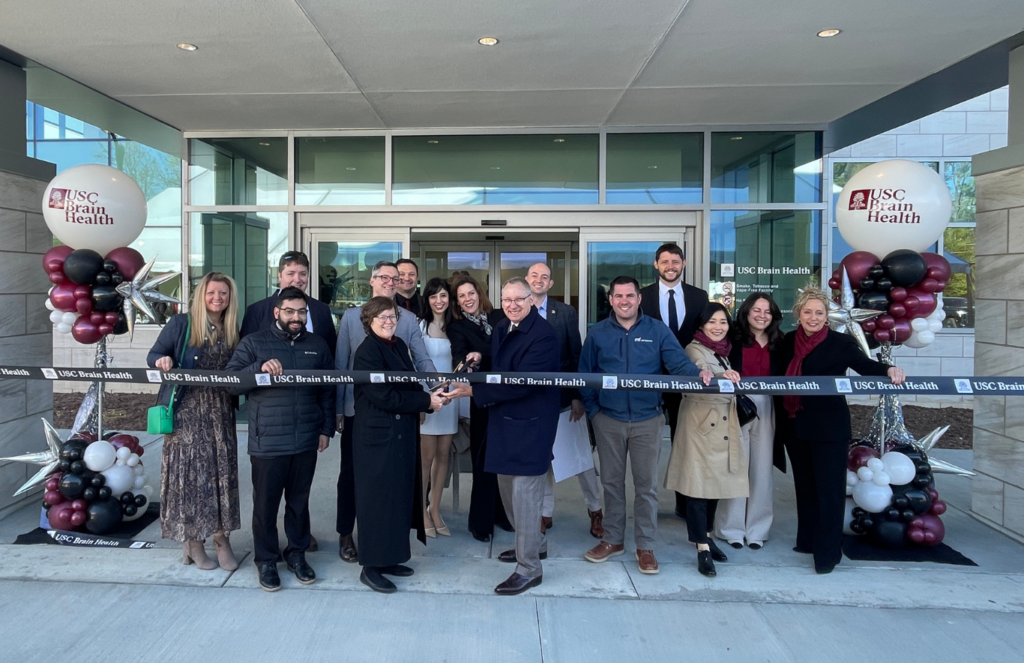
Located on its Health Sciences Campus in Columbia, S.C., the University of South Carolina (USC)’s Brain Health Center expands access to diagnostic support and specialized care for patients with cognitive conditions, such as Alzheimer’s disease and related dementias. The project, which celebrated its opening in March 2026, unifies clinical services, advanced imaging, infusion therapy, rehabilitation, and research under one roof. This allows the center to create opportunities for patients to engage in clinical trials and studies aimed at improving treatment options and outcomes.
The 65,000-square-foot facility required an expansive power supply and safety system to bring the facility online and maintain uninterrupted service. Quackenbush Architects + Planners partnered with Perkins&Will to design the facility, with Hood Construction Company as the general contractor. RMF Engineering provided the MEP and fire protection design for the project to meet these complex needs, allowing the facility to provide advanced care well into the future.
Comfort and Care at the Core
The Brain Health Center features state-of-the-art technology and clinical and research spaces designed with patient care and comfort at the forefront. The outpatient facility offers 16 exam, testing, and treatment rooms, an eight-bay infusion room for therapeutic treatments, and spaces dedicated to physical, occupational, and speech therapy. A small data center located in the lower level of the building supports the facility and its operations.
The Brain Health Center works in conjunction with USC’s statewide Brain Health Network, which includes seven brain health clinics statewide. A neurological and rehabilitation hospital is also in development. The Brain Health Center will provide timely cognitive screenings, evaluations, and community-based support services for patients in seven underserved areas across South Carolina. The facility will also aid the growth of USC’s research into brain-based disorders, supporting advancements in both treatment and understanding of brain health.
Safety Protection Systems
The MEP and fire protection design for the project supports modern clinical, research, and imaging environments within a high-performance facility that is both sustainable and flexible.
Redundancy was designed in key locations to support the resiliency of the mechanical systems, with components including redundant air handling unit fans, building chilled water pumps, data center chilled water pumps, and data center computer room air conditioning units. In the event of a component failure, this set-up allows for replacement to be planned when convenient for the maintenance team rather than on an emergency timeline.
The central air handling and chilled water systems are sized for the eventual fit-out of the entire building, creating a plan to minimize the disturbance to the facility when the fit-out takes place. The rooftop location of this equipment allowed the architectural team to intentionally design a complete rooftop screen wall that is consistent with the other changes to the building façade.
The fire protection system was also strategically designed with resiliency at its core. A new, combination manual wet standpipe and automatic wet sprinkler system serves the building, with double interlock pre-action sprinkler systems in the MRI suite and data center to limit risk to the expensive equipment. The pre-action equipment is located in the incoming water service room alongside the fire protection backflow preventer to facilitate convenient maintenance and testing.
One of the biggest challenges with the fire protection system was installing new standpipes within existing stairwells. The design team worked together to provide a standpipe route that accommodates existing door and wall locations. On the ground level, the exterior wall of the existing stairwell was adjusted to provide the necessary space for piping and the floor sprinkler zone valve assembly.
Powering Technology
The center is powered by the latest technology and tools, including South Carolina’s first 7-Tesla MRI dedicated to patient care and a 3-Tesla MRI scanner that is more than twice as powerful as standard scanners. The ultra-high-field 7-Tesla MRI scanner offers an unprecedented precision in brain imaging, enabling earlier detection of subtle abnormalities. It also provides clear, detailed images for USC researchers conducting pioneering research into neurological conditions.
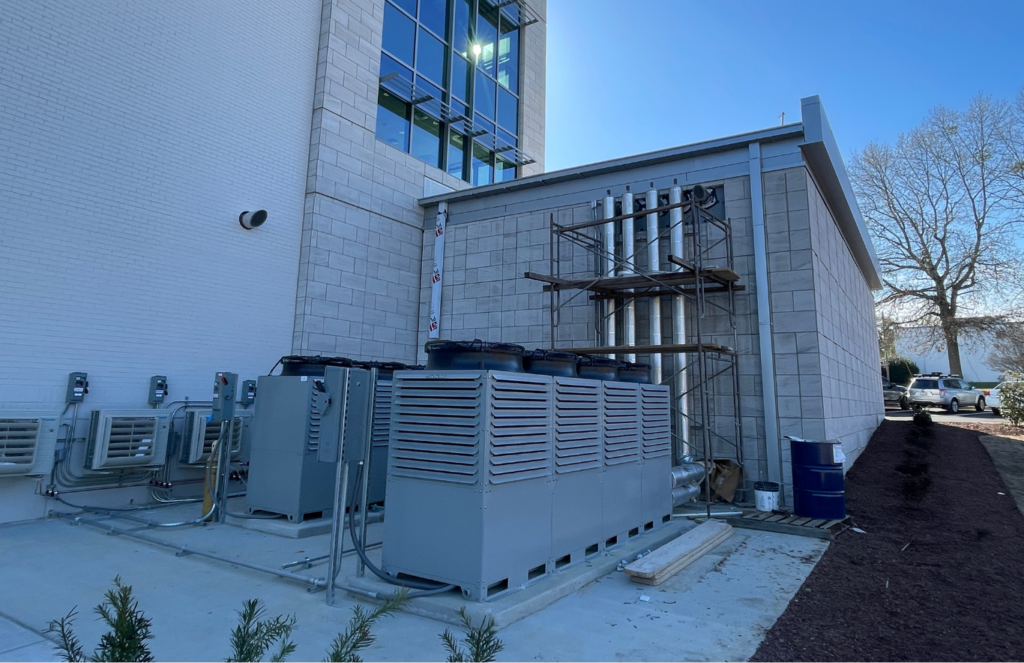
A dedicated chiller and quench vent was strategically designed for each of the MRI scanners. The piping and ductwork associated with this equipment was carefully sized and routed through the building to an exterior mechanical yard with another screen wall, allowing for a clean visual at the low roof above the MRI suite while also intentionally limiting access to service personnel.
As a result of this careful planning and implementation, the long-term performance of USC’s Brain Health Center is anchored in a thoughtfully integrated approach to fire protection and building technology. These systems form a cohesive backbone that safeguards occupants and equipment while enabling uninterrupted clinical care and research. In doing so, the Brain Health Center demonstrates how forward-thinking approaches to these project elements can elevate both safety and performance in highly specialized healthcare environments.
Michael Scruggs, PE, is a Project Manager at RMF Engineering.