

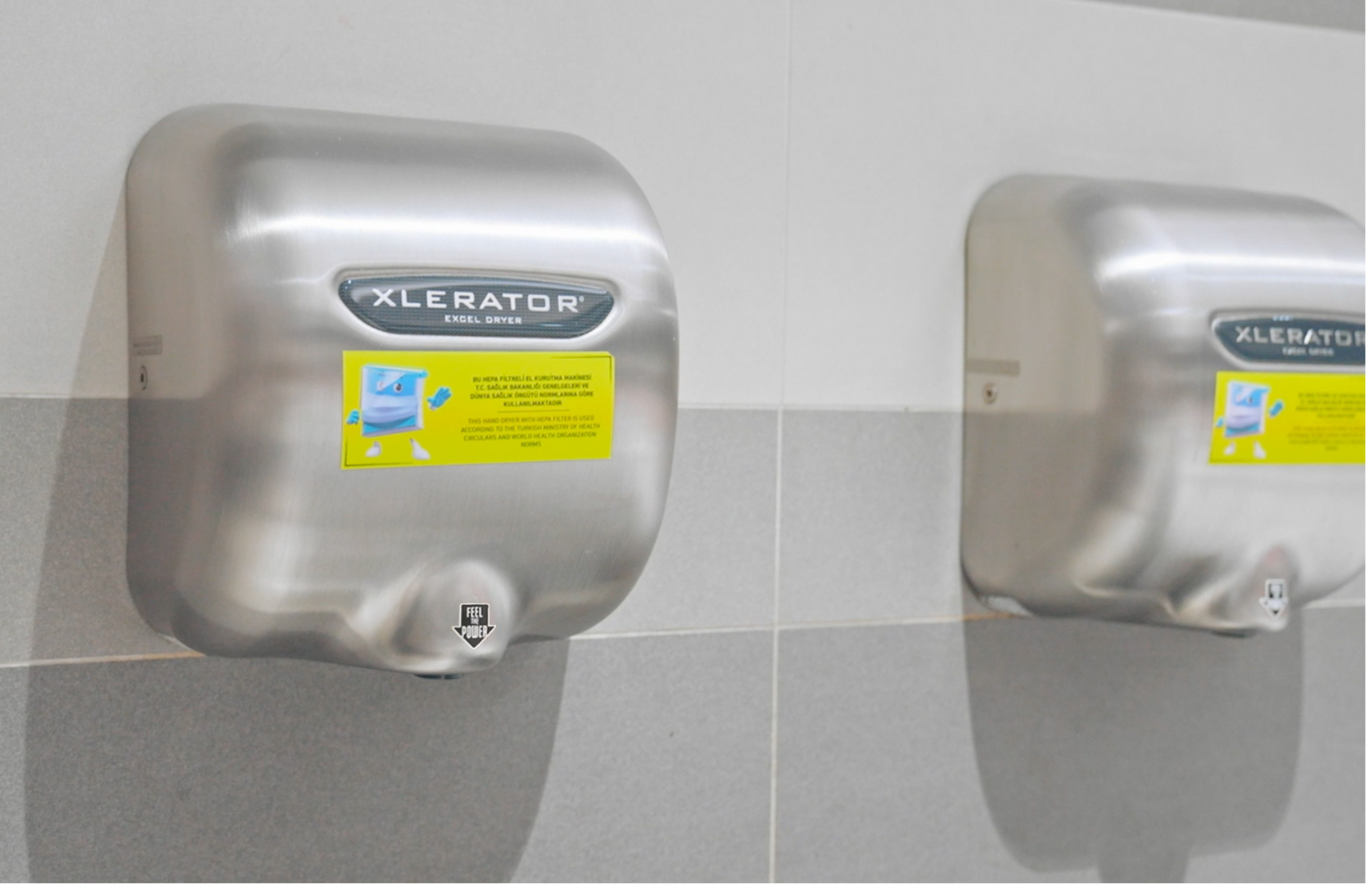
The Infection Control Board determined that traditional high velocity dryers, where hands are held beneath the airflow, offer a more hygienic solution than trough style units. | Photo Credit (all): Excel Dryer Inc.
By William Gagnon
For years, a quiet battle has been unfolding in public restrooms, one most people rarely notice. In healthcare settings, that debate carries far greater weight. Paper towels and hand dryers have long competed for dominance, each claiming to support cleanliness and efficiency. But as hospitals and healthcare facilities face increasing pressure to reduce costs, meet sustainability goals and maintain the highest hygiene standards, the conversation is no longer about preference. It is about what actually performs in environments where sanitation is critical.
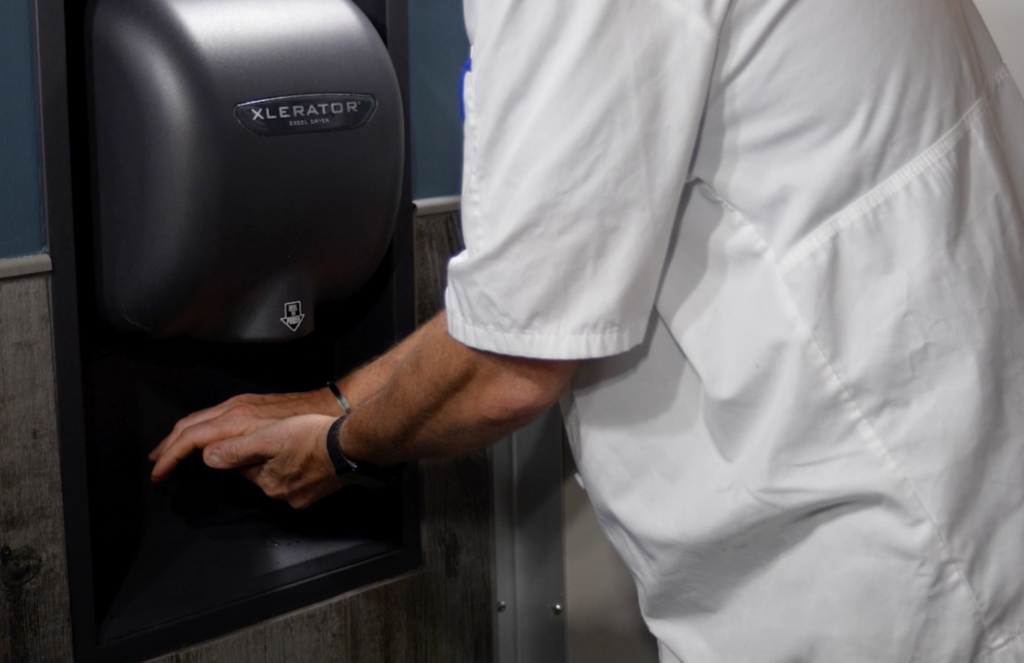
At Northwestern Memorial Hospital, that question became central to a broader initiative. The hospital launched a “Clean hands every time” campaign, aimed at reinforcing proper hand hygiene among staff, patients and visitors. At the same time, facilities leadership began rethinking restroom design to better align with infection control, operational efficiency and long-term sustainability goals.
For healthcare facilities, hand drying is not a minor detail. It is part of a larger system that affects infection prevention, maintenance demands and user perception. Facility managers, architects and engineers are not simply choosing between two drying methods. They are selecting between two operating models that directly impact labor, plumbing systems, waste streams and hygiene outcomes.
Paper towels have long been the default. They are familiar and easy to use. But in a hospital environment, they introduce a range of hidden challenges. Dispensers require constant monitoring, inventory must be stored and managed and waste must be collected and removed continuously. In high traffic healthcare settings, that cycle becomes relentless.
At Northwestern Memorial Hospital, those challenges were compounded by the use of low-flow plumbing fixtures. “The paper towels were getting flushed down the low flow toilets, causing blockages,” said David Stout, director of facilities engineering. What began as a convenience issue quickly became a significant operational burden. Frequent plumbing calls, combined with ongoing restocking and cleanup, consumed valuable staff time and resources.
This intersection highlights a critical issue for healthcare construction and design. Low-flow toilets are a cornerstone of sustainable restroom design, but when paired with paper towels, they can undermine performance. Clogs, overflows and increased maintenance costs become common, especially as handwashing rates have increased in recent years.
As part of its restroom refurbishment efforts, Northwestern Memorial Hospital evaluated alternatives. The facilities team worked closely with the Infection Control Board to assess hand drying options, with hygiene as the top priority. Unfounded concerns about air dryers have circulated for years, but the scientific literature does not support them.
A 2020 critical review published in the Journal of Applied Microbiology analyzed dozens of studies comparing paper towels and electric dryers and found the results to be mixed, inconsistent and often limited by study design. The review concluded that the existing body of evidence does not support one method as more hygienic than the other and that no data links hand drying methods to actual health outcomes. What is clear, however, is that proper handwashing followed by thorough drying is essential, as wet hands are far more likely to transfer bacteria.
At the same time, not all dryer designs perform equally. After evaluation, the Infection Control Board determined that traditional high velocity dryers, where hands are held beneath the airflow, offered a more hygienic solution than trough style units, which can collect standing water and debris. That distinction proved important in a healthcare setting where every surface must be considered.
With approval in place, the hospital began installing XLERATOR® high speed hand dryers across its campus. The results were immediate. Plumbing issues tied to paper towel disposal were eliminated. Restrooms became easier to maintain. Waste streams were reduced.
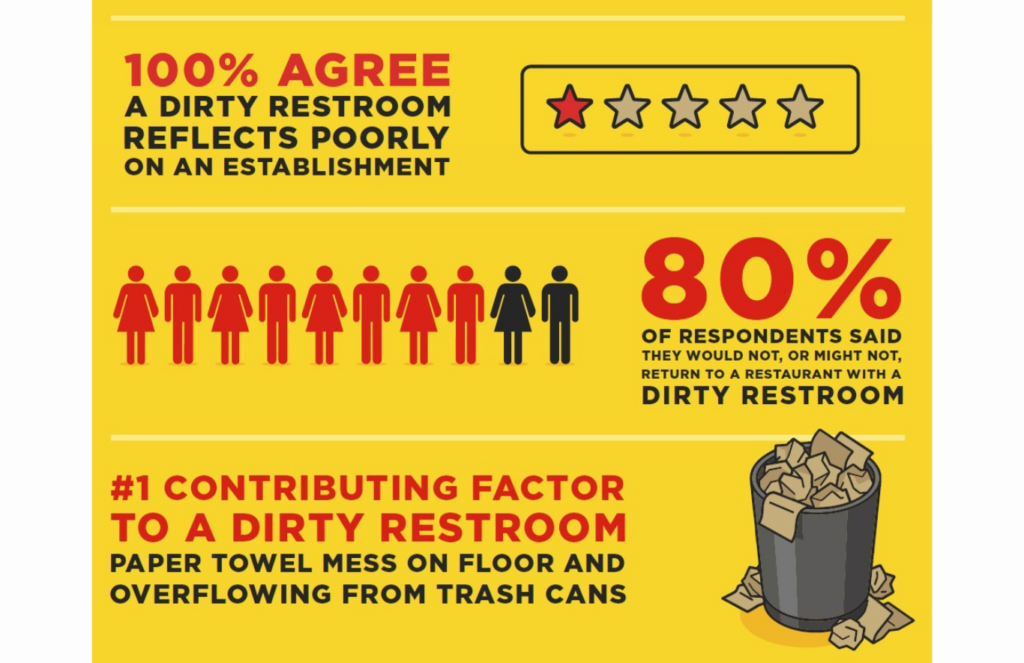
The impact extended beyond maintenance. Cleanliness perception also improved. A global survey conducted with MetrixLab found that cleanliness is the top concern in restrooms and that paper towels are the leading factor making spaces appear dirty, whether in overflowing bins or scattered on the floor. In healthcare environments, where perception is closely tied to trust, that carries added importance.
Cost savings followed. An internal analysis comparing paper towel usage to the installation of high speed dryers showed annual savings exceeding $20,000 in the initial phase. Additional benefits came from reduced storage needs, lower transportation costs and less waste handling. Over time, more than 120 dryers were installed across the hospital’s main campus, with additional units planned for new facilities.
For those involved in healthcare construction and facility planning, the implications are clear. Restroom design decisions do not operate in isolation. Choices around fixtures, materials and systems must work together. Pairing low flow plumbing with paper towels can introduce unintended consequences. Integrating high efficiency hand dryers offers a more cohesive solution.
For architects and designers, this means ensuring sustainability goals are not compromised by downstream maintenance issues. For facility managers, it presents an opportunity to reduce labor demands and eliminate recurring problems. For owners and operators, it reinforces the link between cleanliness, efficiency and patient confidence. For procurement professionals, it shifts the equation from ongoing consumable costs to a long term investment with measurable return.
Hygiene remains central to the discussion. Modern touchless hand dryers equipped with electrostatic HEPA (eHEPA®) filtration provide an added layer of air quality control while supporting fast, effective drying without the waste associated with paper towels. In environments where infection control is paramount, that combination of performance and efficiency is increasingly important.
The debate between paper towels and hand dryers is not new. In healthcare, however, the stakes are higher and the variables more complex. When evaluated through the lens of infection control, plumbing compatibility, maintenance efficiency and sustainability, the case becomes clearer.
At Northwestern Memorial Hospital, the shift was not just about replacing one technology with another. It was about aligning every element of restroom design with the broader goal behind its campaign. Clean hands every time, supported by systems designed to make that standard easier to achieve.
William Gagnon is the Executive Vice President and COO of Excel Dryer Inc.