

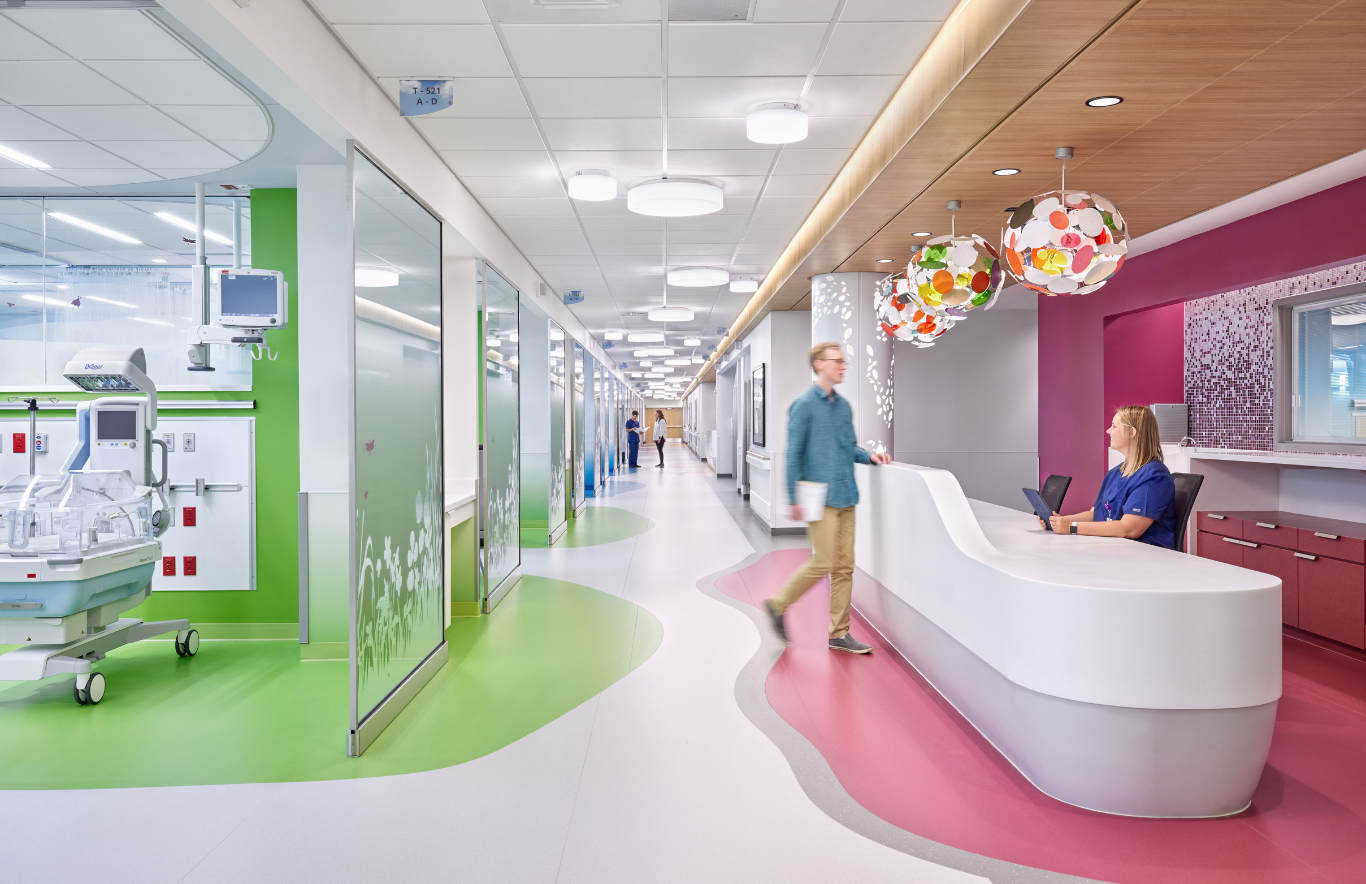
In large-scale environments like Renown Health, flooring must perform consistently across a wide range of spaces, from corridors to patient care areas, without compromising aesthetics or function. | Photo Credit: Garrett Rowland Photography
By Anne Marie Lisko
Healthcare design traditionally prioritized efficiency, sterility, and sanitation. Today, patient-centered care is reshaping how these spaces look, feel, and function. Patient and staff safety is non-negotiable, and comfort increasingly influences outcomes including well-being, cognitive health, and recovery.
Patient rooms are now being designed to feel more like luxury hotel rooms. And waiting areas, operating rooms, and hallways are becoming less clinical by incorporating natural, biophilic-inspired influences.
Flooring is foundational and sets the tone for the space while also meeting the high-performance demands of healthcare environments.
For years, healthcare environments have focused on the use of resilient flooring, especially rubber, for its durability, safety, and ease of maintenance. Now, with recent innovations in design across the category, healthcare designers can better address aesthetic needs without compromising performance requirements.
Designing for Occupant Well-Being and Comfort
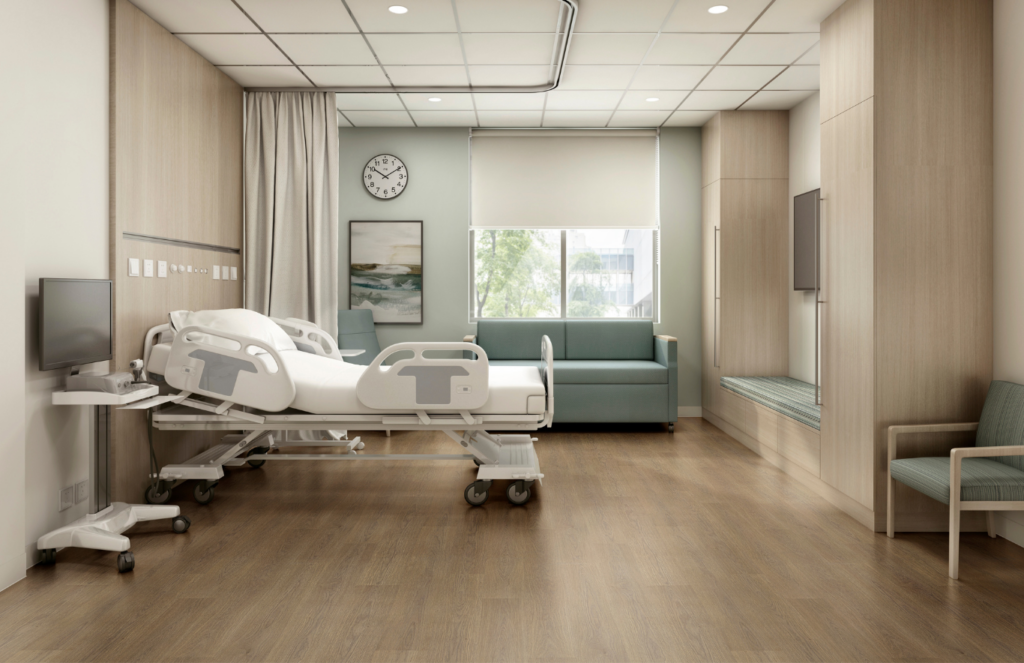
In healthcare environments, well-being and safety are paramount. As care becomes more patient-centered, facilities are taking a more holistic view that includes both clinical outcomes and how spaces support and comfort occupants.
Physical Well-Being
Comfort is essential in care delivery. Patients, visitors, and staff spend long periods of time in these spaces. That means the materials and products that make up these environments must work hard to support them.
Rubber flooring supports physical well-being in many ways:
- Underfoot comfort creates a more forgiving walking experience and reduces fatigue during long shifts
- Supportive surfaces provide stability for patients with limited mobility
- Reduced noise with sound-absorbing solutions
- Wayfinding through color, pattern, and transitions guides movement through complex environments
Emotional Experience
Equally important is how a space feels. Design choices and materials shape the care experience before a patient even registers it.
Today’s rubber flooring takes cues from hospitality design principles, cultivating a healing experience through:
- Warmer, natural aesthetics, including wood-inspired visuals and softer color palettes
- Biophilic-inspired design, bringing elements of nature into the built environment, creating regenerative and healing spaces
- Design flexibility that aligns with human-centered strategies and addresses both current and future needs
Designers at the YUNA Fertility Center in St. Gallen, Switzerland, looked for design materials cultivate an environment where patients immediately feel calm and at ease. They selected noravant® from Interface, a warm woodgrain rubber floor, to complement a regenerative, coordinated interior concept.
Performance Without Disruption
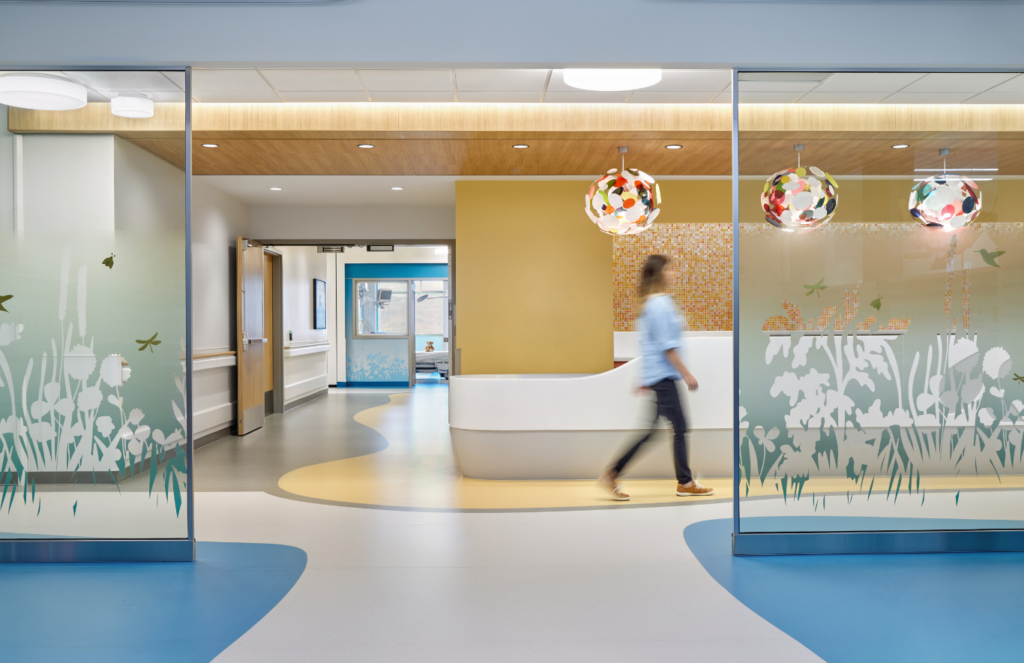
Healthcare spaces operate continuously, leaving little room for downtime. Even brief interruptions can directly impact continuity of care, patient safety, staff well-being, and overall productivity and profitability. Materials must perform reliably during installation, renovation, and maintenance.
Flooring solutions designed for continuity can help minimize disruption to patient care. For example:
- Efficient installation methods reduce construction timelines
- Modular solutions limit operational interruptions and increase opportunities for reuse
- Ease of maintenance and cleaning helps maintain a consistent, high-quality environment while reducing strain on facilities teams
Kern Medical’s executive and facilities management teams prioritize building materials that can stand up to the demands of a busy healthcare facility. The hospital implemented nora® rubber flooring products to support ongoing operations while enhancing the look and feel of the space. This demonstrated how material choices can align with both performance and patient experience needs.
Standing Up to Demands of High-Traffic Environments
Constant foot traffic, rolling equipment, and frequent cleaning repeatedly test material performance in healthcare facilities.
Rubber flooring is well-suited to these conditions, offering:
- High durability to withstand heavy, continuous use
- Resistance to wear and indentation from rolling loads and equipment
- Long service life that limits the need for frequent replacement, while also reducing life cycle costs
In large-scale environments like Renown Health, flooring must perform consistently across a wide range of spaces, from corridors to patient care areas, without compromising aesthetics or function.
By maintaining performance under pressure, nora rubber helps ensure that healthcare environments remain safe, functional, and visually consistent over time.
Designing for Long-Term Impact
As healthcare organizations evaluate materials more holistically, long-term performance and environmental impact are increasingly important. Selecting low-carbon and long-lasting building materials helps reduce carbon footprints and contribute to a better environment for patients and staff.
Rubber flooring supports these policies through:
- Extended product life cycles, reducing replacement frequency with some products lasting up to 50 years
- Lower maintenance requirements, minimizing resource use over time
- Material transparency, supported by third-party documentation like EPDs and HPDs
- Resilient flooring solutions deliver against the needs of healthcare environments through durability and material make-up, including options without PVC and plasticizers. These characteristics support healthier environments while aligning with broader sustainability goals.
Supporting Better Outcomes Through Flooring
Flooring is often viewed as a background element, but in healthcare design, it’s central to both safety and experience. By leaning into hospitality-inspired and biophilic design principles and prioritizing holistic patient well-being, flooring becomes a strategic tool to support occupant needs.
When thoughtfully specified, flooring can:
- Reduce risk through reliable, slip-resistant surfaces
- Enhance comfort for patients, visitors, and staff
- Support calming environments that promote rest and recovery
- Maintain performance over time without disruption
Materials that successfully balance performance, aesthetics, and patient experience are essential as healthcare design evolves. Better outcomes start with a strong foundation designed with intention and care for everyone who interacts with the space.
Anne Marie Lisko is Vice President of Global Product Category Management at Interface.