

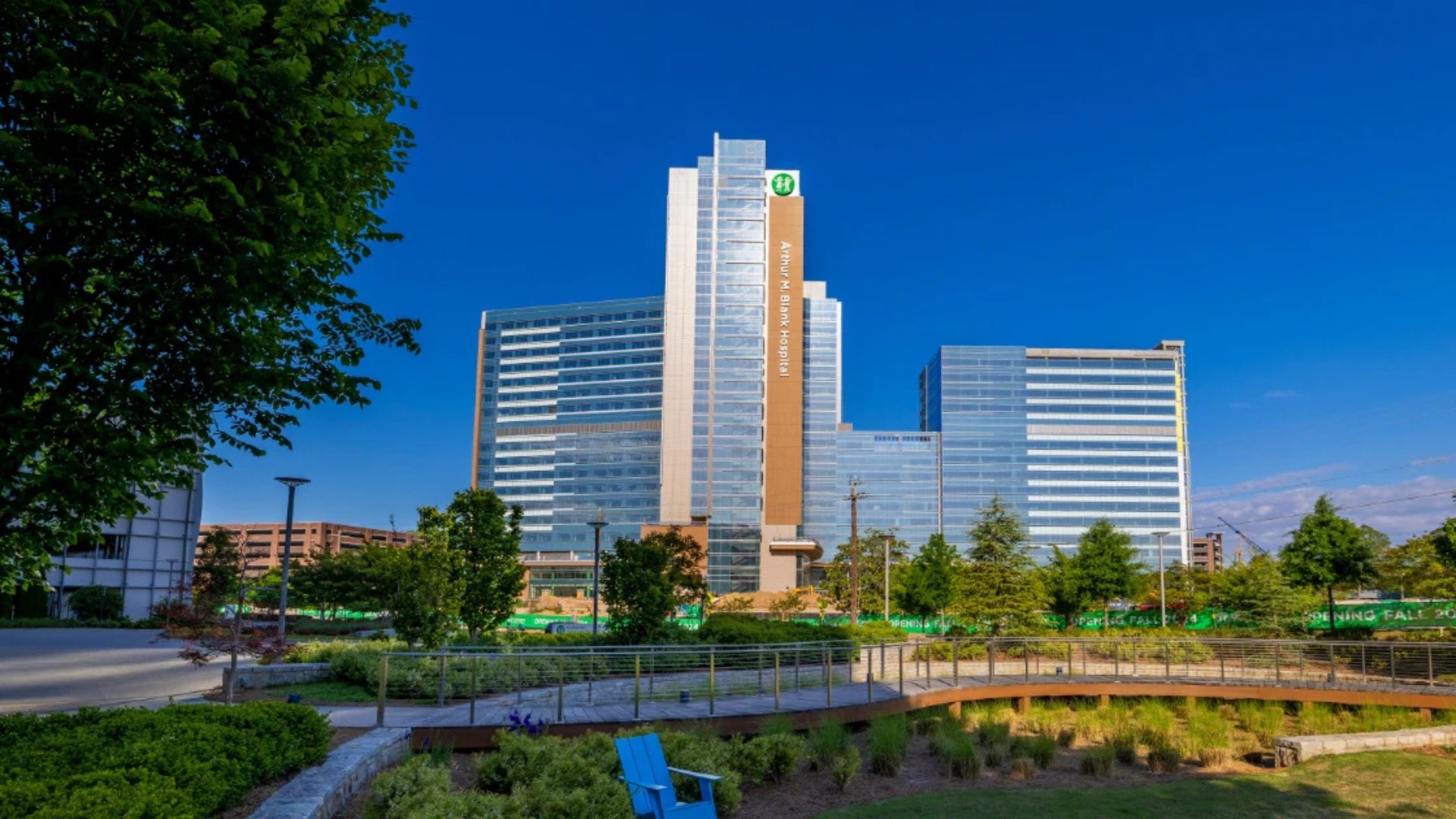
After joining Children’s Healthcare of Atlanta in 2016, Chelette led the master planning, design, and construction of the more than $2 billion North Druid Hills campus, which included the Center for Advanced Pediatrics, the Support Center for non-clinical offices and training, and Arthur M. Blank Hospital. | Photo Credit: Children’s Healthcare of Atlanta
By Lindsey Coulter
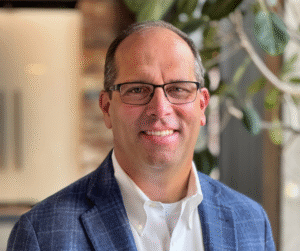
In fall 2025, Chris Chelette returned to JE Dunn Construction after serving as Senior Vice President of Facilities Services at Children’s Healthcare of Atlanta for nine years. Chelette already had a long history with the construction firm, having spent 17 years growing through the organization’s healthcare business unit. In his new role as Senior Vice President – Healthcare, Chelette is now responsible for providing strategic leadership and operational oversight for healthcare projects in the southeast.
After joining Children’s Healthcare of Atlanta in 2016, he led the master planning, design, and construction of the more than $2 billion North Druid Hills campus, which included the Center for Advanced Pediatrics, the Support Center for non-clinical offices and training, and Arthur M. Blank Hospital, a 2-million square foot 446-bed replacement hospital that opened in 2024. Providing direct management and executive oversight on this project and others across the country prepared Chelette well for the transition back to JE Dunn.
“Spending nine years on the owner side, including facility operations, broadened my perspective beyond my experience with a construction company. Managing the construction project “inside the fence” became the least of my daily worries,” Chelette said. “This was especially true because I knew the experienced men and women, our construction partners, who led the projects were focused on doing an exceptional job, just as I had when I was in their shoes.”
On the owner side, however, Chelette found new concerns and priorities — such as how to manage and maintain the building upon completion, prevent and mitigate risk within the new campus, staff the many positions needed and maintain a strong culture.
“Additionally, as an owner, there were many more stakeholders who deserved my time and attention throughout the process, to ensure their interests were being considered,” Chelette added. “One of the key takeaways from my time as an owner that is shaping my focus now that I’m working for a construction firm again is recognizing the many stresses our healthcare systems face and finding ways to help solve so many more of our clients’ needs, by simply thinking ‘outside of the fence’ more often.”
HCO News spoke with Chelette about the significant North Druid Hills project as well as lessons learned from his experience bridging the divide.
HCO: What decisions from the North Druid Hills project most changed how you think about sequencing, stakeholder alignment and long-term flexibility?
Chelette: Building a new campus like North Druid Hills or a new facility like Arthur M. Blank Hospital requires a long-term perspective, not just the current scope objectives, but also the long-term growth plan to ensure maximum flexibility. The decisions made throughout projects like these will have a lasting impact, well beyond 50 years. One key to success is balancing project scope objectives with budget and schedule constraints that satisfy the needs of hundreds of engaged stakeholders, while also assessing how decisions may impact long-term flexibility or growth. I believe the biggest key to the project’s success was that delivering the best care and environment for the kids was at the heart of every single decision. From room layout to air quality, and landscaping to interior design, and many decisions in between, everything was done for the kids and their families. Everyone involved was laser-focused on that single goal, and ultimately, the mission of the organization.
HCO: You’ve worked with nonprofit and for-profit healthcare systems. What differences matter most in delivery expectations, governance and risk tolerance — and how should project teams adapt?
Chelette: Generally speaking, nonprofit and for-profit organizations can vary in several ways. One of the most notable differences is regarding the processes and number of stakeholders involved with governance and decision-making. Sometimes for-profits can be more nimble, due to fewer stakeholders and decision-makers, while nonprofits can require more time in their schedules for building consensus with larger stakeholder groups. In both types of organizations, clear governance and the ability to make decisions without wavering are essential to project success. It is important for project teams to learn their client’s culture and decision-making processes and priorities so the team can find ways to support and align with those priorities/culture to help facilitate decision-making.
HCO: On large hospital programs (like a replacement hospital), what’s your philosophy on standardization vs. customization — and where have you seen each approach succeed or fail?
Chelette: I strongly believe in standardizing as much as possible to minimize variation for hospital staff and optimize project schedules, while also allowing maximum flexibility for “future-proofing” and specialized care delivery. For example, as much as we planned for bed units and sizes, certain services shifted in volume over our eight-year project lifecycle. Because of our efforts to standardize, it was easy to flex department sizes up and down or move them within the stack to accommodate day-one needs. That said, standardization is more difficult when dealing with highly specialized patient needs and higher acuities. What works well for the neonatal ICU team may not necessarily meet the needs of the cardiac ICU team. It takes plenty of discussion, careful planning, and a very thoughtful and creative standardization team to make the best decisions. Otherwise, standardization could result in frustration or inability to meet patient care needs or ensure long-term flexibility.
HCO: What’s one process or habit you rely on to keep complex healthcare projects from drifting — scope, budget, schedule, or quality — when pressures inevitably stack up?
Chelette: Keep it simple and take one bite at a time! Project complexity is ever increasing with technology, delayed decisions, accelerated schedules, limited labor forces, etc. Sticking to a process, reducing decision-making complexity, and proceeding methodically, step-by-step tends to provide certainty and reassurance, will serve our project teams and clients well.