

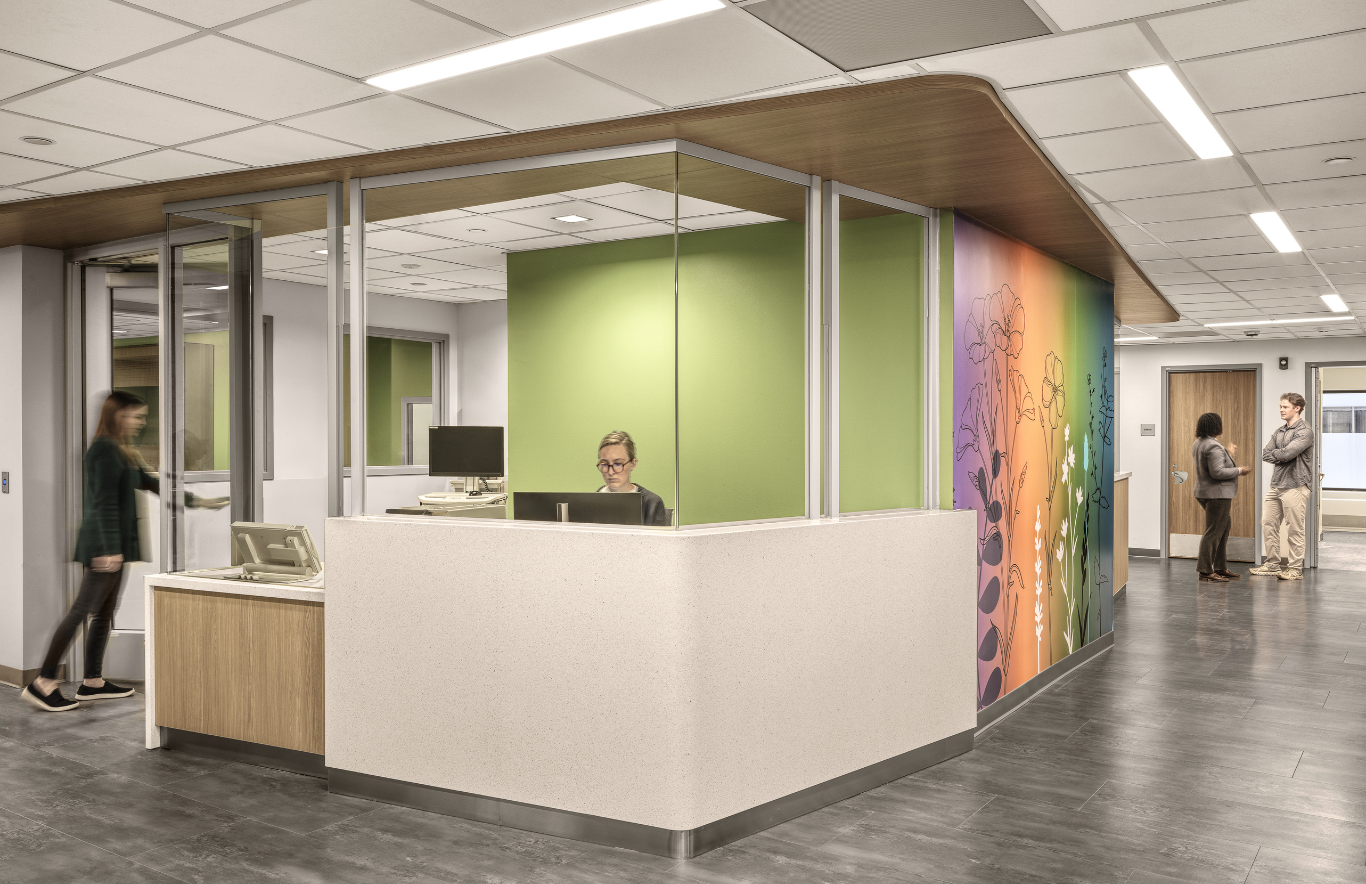
One of the most enduring design principles in behavioral health settings has been the elimination of blind spots and maximization of visibility. | Photo Credit (all): Alise O’Brien
By Ganesh Sathyan and Colleen Goodwin
Over the past several decades, the design of behavioral health environments has been shaped by a clear and critical priority: patient safety. Historically, facilities were developed with a strong emphasis on minimizing risk, particularly risks related to self-harm, elopement, or patient-to-patient conflict. Design strategies focused on durable materials, ligature-resistant fixtures, controlled circulation, and constant observation. While these principles remain foundational, the contemporary narrative in behavioral health design is expanding. Today, the conversation increasingly recognizes the importance of staff safety, operational efficiency, and flexibility to accommodate diverse patient populations, reflecting the growing complexity of behavioral healthcare delivery.
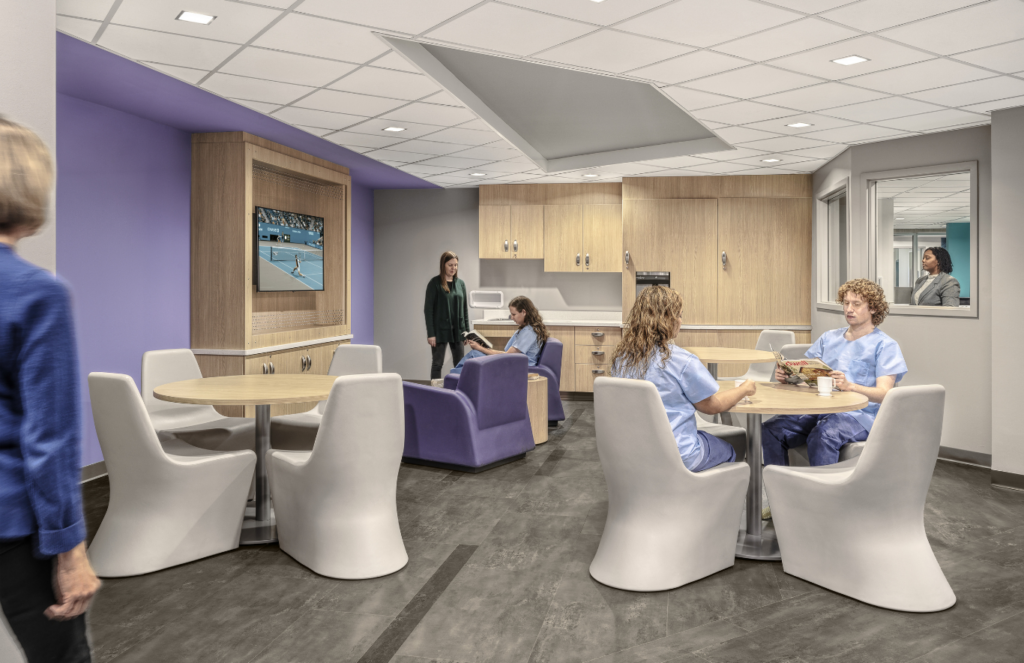
One of the most enduring design principles in behavioral health settings has been the elimination of blind spots and maximization of visibility. Direct observation has long been considered one of the most effective strategies for maintaining safety on inpatient units. As a result, unit planning frequently prioritizes clear sightlines from staff work areas into corridors, dayrooms, and other patient spaces. To support effective monitoring while maintaining a manageable care environment, many facilities have adopted a pod-based model, typically organizing patients into clusters of 10–12 beds per pod. This scale allows staff to supervise patients more effectively and fosters a more intimate, community-like setting that can be beneficial to therapeutic engagement. Within these pods, staffing ratios generally range from one staff member for every five to six patients, a balance intended to maintain safety while enabling meaningful interaction between caregivers and patients.
The design of the nurse station has also undergone significant evolution as behavioral healthcare has sought to balance safety with therapeutic engagement. Traditionally, nursing stations were fully enclosed spaces, physically separating staff from patients and serving as a secure operational hub for documentation, medication management, and communication. While this approach provided a strong sense of protection for staff, it often created a visible barrier between caregivers and patients, reinforcing a more institutional atmosphere.
In response, many facilities began experimenting with open or “no-barrier” nurse stations, aiming to reduce the physical and psychological divide between staff and patients. These open configurations were intended to foster trust, encourage communication, and create a more normalized environment that supports recovery-oriented care. However, operational experience over time has highlighted certain challenges associated with completely open stations, particularly related to staff vulnerability during moments of patient escalation or agitation.
As a result, many facilities are now gravitating toward a hybrid approach that attempts to capture the benefits of both models. Enclosed nurse stations are being reintroduced, but with laminated safety glass and improved visibility, allowing staff to maintain a visual and psychological connection with patients while still providing a measure of protection. This approach reflects a broader shift in behavioral health design thinking—acknowledging that staff safety is intrinsically linked to patient safety, and that care environments must support the wellbeing of caregivers as well as those receiving treatment.
Beyond safety and observation, modern behavioral health design is increasingly focused on creating environments that actively contribute to the therapeutic process. One of the most sought-after features in contemporary facilities is access to outdoor space. Secure courtyards, gardens, and walking paths offer patients the opportunity to engage with natural light, fresh air, and vegetation—elements that have been shown to reduce stress, improve mood, and support emotional regulation. For staff, these outdoor areas provide an additional therapeutic tool, allowing patients to decompress and participate in structured activities that extend beyond the traditional confines of the inpatient unit.
Complementing outdoor environments, many facilities are also incorporating dedicated indoor activity zones designed to promote physical movement and constructive engagement. These spaces may include features such as walking tracks, multipurpose recreation rooms, basketball courts, or fitness areas. Physical activity is increasingly recognized as an important component of behavioral health treatment, helping to reduce anxiety, channel energy productively, and support overall mental wellness. By integrating these spaces into the unit design, facilities can provide opportunities for both structured programming and supervised recreational time.
Importantly, access to both outdoor environments and activity zones is often integrated into the therapeutic and behavioral management framework of the unit. Participation in these spaces may be contingent on patient behavior and clinical readiness, allowing staff to use them as incentives that reinforce positive engagement with treatment. This approach aligns environmental design with therapeutic strategy, making the built environment an active participant in the care process.
However, the inclusion of these spaces also introduces operational considerations that must be addressed during the planning and design phases. Outdoor courtyards and recreation areas require appropriate supervision, and facilities must consider how staffing levels and circulation patterns will support safe access to these amenities. Designers and clinical teams must collaborate closely to ensure that these features enhance therapeutic value without inadvertently creating new safety or security challenges.
Taken together, these evolving trends reflect a broader transformation in the philosophy of behavioral health design. Rather than focusing solely on risk mitigation, contemporary facilities are striving to create environments that balance safety, dignity, therapeutic engagement, and operational practicality. The modern behavioral health unit is increasingly viewed not just as a place of containment, but as a carefully designed setting that supports healing, promotes positive behavior, and protects both patients and the professionals who care for them.
As behavioral health needs continue to grow and diversify, this integrated approach to design—one that combines visibility, staff protection, access to nature, and opportunities for physical activity—will play an increasingly important role in shaping the next generation of care environments.
Ganesh Sathyan is an Associate Principal, Healthcare, at Lawrence Group. Colleen Goodwin is an Architect at Lawrence Group.