

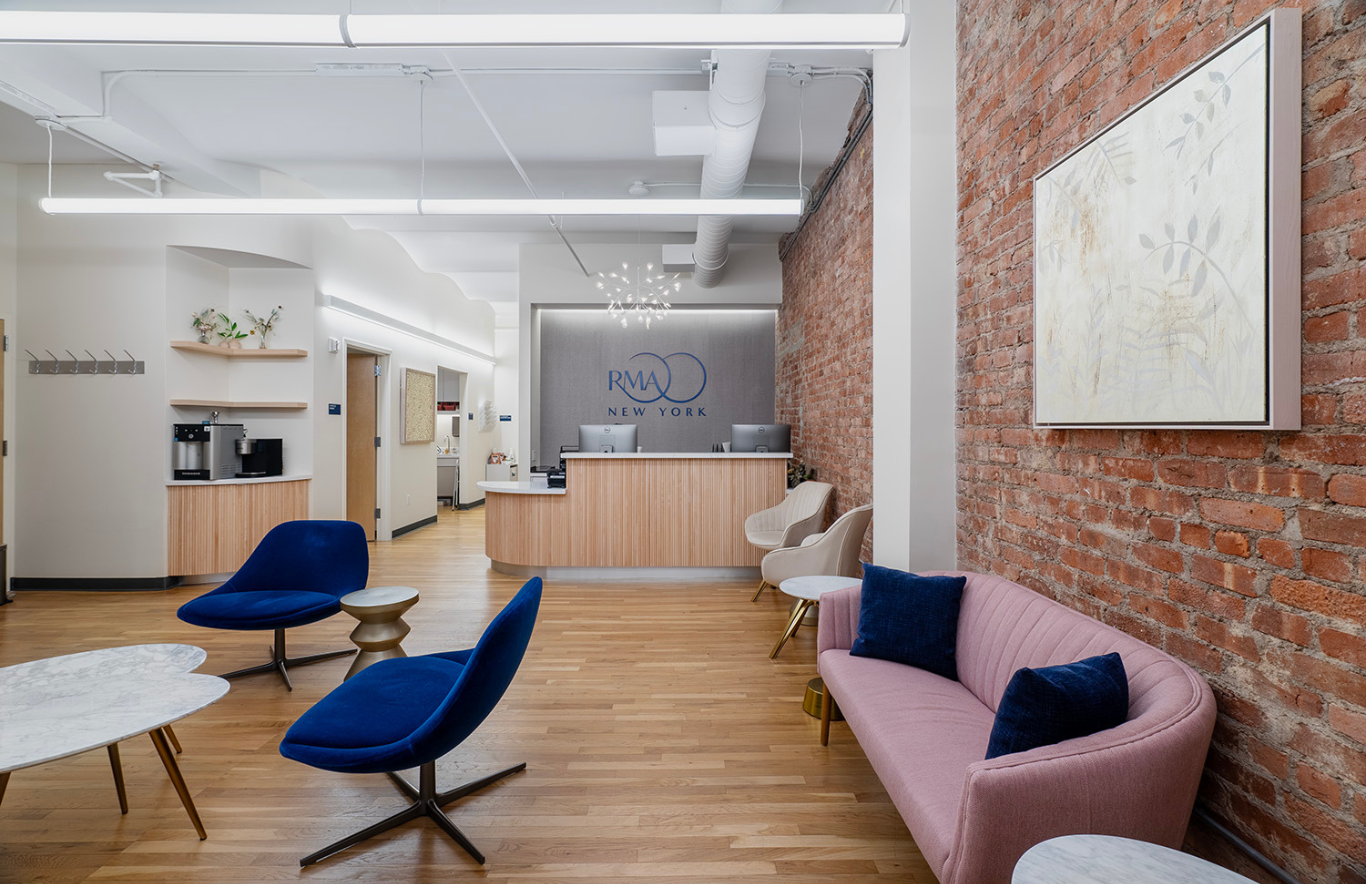
Medical office conversions (such as RMA of New York) can transform vacant buildings into high-value assets, but they often require significant infrastructure upgrades to make older office spaces suitable for healthcare use. | Photo Credit (all): Courtesy of TPG Architecture
By Al Thompson
Class A offices in Manhattan are leasing quickly, with some buildings reporting just ~3–4 % availability. While these spaces are in high demand, older, secondary buildings are seeing rising vacancies as they struggle to attract tenants. This trend presents a unique opportunity for architects and landlords to repurpose underutilized office buildings.
One promising solution is converting these spaces into medical offices to help meet the growing demand for specialized, long-term healthcare facilities. However, medical office conversions can be challenging. Retrofitting existing structures to accommodate heavy equipment, advanced electrical systems, specialized HVAC and patient-focused circulation requires careful planning.
Transforming Infrastructure & Specialized Systems for Clinical Use
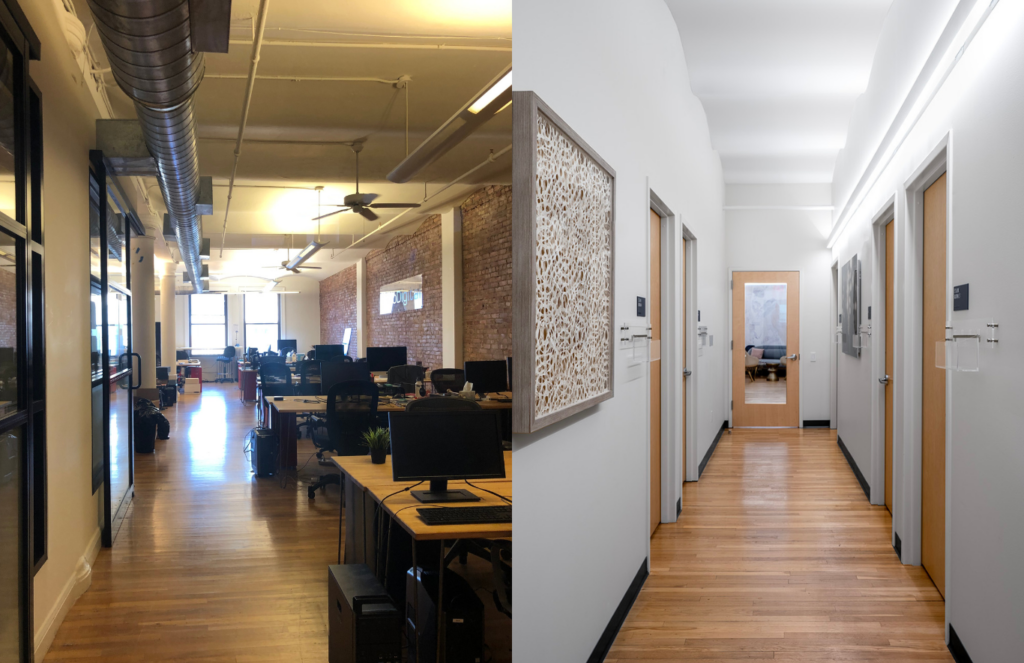
Medical office conversions can transform vacant buildings into high-value assets, but they often require significant infrastructure upgrades to make older office spaces suitable for healthcare use. Certain medical modalities require heavy equipment, which may necessitate structural reinforcement and higher floor-to-floor and ceiling heights to provide the necessary space. Along with spatial dimensions, architects must also consider electrical systems. Electrical systems have to accommodate high-powered equipment, including imaging machines, surgical lighting, and lab devices. In certain cases, on-site generators may be needed to provide emergency power for patients, on grade or on the roof, depending on site and building constraints.
Medical spaces also require enhanced environmental and safety systems. Specialized HVAC systems to maintain air quality and proper ventilation are necessary for infection control, along with plumbing modifications to accommodate additional hand-wash sinks, sterilization areas and more restrooms. If the space is more for emergency care, ambulatory surgery centers require medical gases supplied from bottles or an oxygen farm, each with its own safety requirements. Careful integration of these systems ensures that converted spaces meet code requirements and provide a safe, functional environment for both patients and staff.
Regulatory Challenges and Compliance Considerations
Healthcare conversions also demand careful navigation of local, state, and federal regulations to ensure the project meets all code and safety standards. Compliance often includes fire and life safety codes, accessibility standards, and, in many jurisdictions, meeting the (FGI) Facility Guidelines Institute for healthcare.
From the outset, landlords must ensure that an adaptive reuse project complies with all applicable codes, including inspection approvals, permits, and ongoing maintenance requirements. Failing to address regulatory needs early in the design process can result in costly delays, redesigns or fines. Engaging legal teams during the planning phase helps anticipate challenges and streamline approvals, ensuring the converted space is fully functional and compliant when tenants move in.
Optimizing Circulation & Patient Flow in Mixed-Use Buildings
In mixed-use buildings that combine healthcare and traditional offices, designing for smooth circulation is critical to ensure patients and office tenants can move efficiently and safely. Congested hallways, shared elevators, or crowded waiting areas can lead to dissatisfaction for both office tenants and patients and create operational inefficiencies for healthcare providers. Thoughtful circulation design enhances the patient experience, supports staff workflow, reduces delays in care delivery and minimizes conflicts with non-medical tenants.
Thoughtful circulation is particularly important in large practices exceeding 6,000 square feet, where high patient volumes can place significant demands on shared facilities. Elevators must accommodate stretchers and necessary medical equipment, which requires larger elevator cabs and entrances. To address these challenges, architects must collaborate with healthcare tenants and building owners to create dedicated lobbies and separate elevator banks for medical floors, keeping them distinct from the high-rise elevators serving office tenants. This approach improves patient flow, reduces congestion and enhances the experience for all building occupants.
Looking Ahead: Trends in Mixed-Use Healthcare Spaces
As outpatient care continues to grow, the ongoing needs of aging populations and patients with comorbidities are driving demand for both hospital beds and outpatient facilities. This dual demand creates unique challenges for landlords and healthcare operators, including the need to design flexible spaces that accommodate varying patient acuity and equipment needs. When design firms approach adaptive reuse for medical practices, they often begin by identifying a best-use scenario, outlining which types of practices are feasible within a building or on a particular floor. Starting with an ideal-case framework allows landlords and architects to anticipate the evolving needs of healthcare and ensures that conversions remain flexible and adaptable over time.
Focusing on adaptability sets the stage for healthcare delivery to evolve, as spaces must accommodate changing patient needs, technologies and care models over time. Office-to-medical conversions offer landlords a unique opportunity to leverage vacant or underutilized space. Success in these conversions depends on thoughtful planning, regulatory compliance and designing for patient flow. Done correctly, these conversions do more than address vacancy; they reshape buildings into essential healthcare infrastructure, while maximizing property value and long-term tenant relationships.
Al Thompson is Managing Executive & Healthcare Studio Leader for TPG Architecture.