

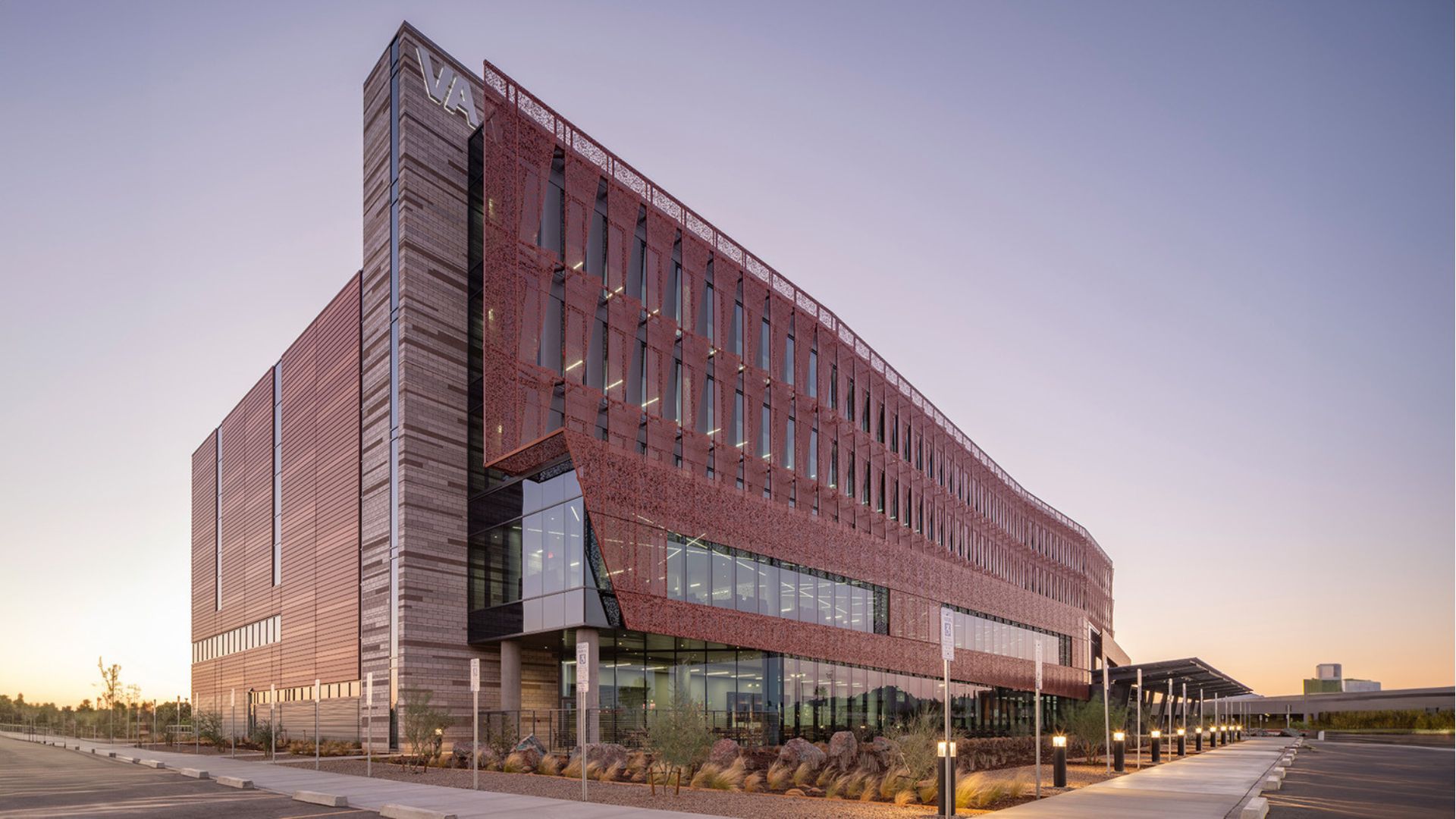
Phoenix 32nd Street VA Clinic, a 275,157-square-foot, five-story facility located in Phoenix, Ariz., is one of the largest VA outpatient clinics in the U.S., featuring multispecialty and telehealth clinics, an education center, pathology and imaging. | Image Credit: Hoefer Welker
By Patrick McCurdy AIA, ACHA, NCARB and Travis Leissner AIA
In today’s rapidly evolving healthcare landscape, demand for outpatient facilities continues to grow. The traditional monolithic hospital is no longer the sole center of care. Driven by patient preferences, technological advancement and cost efficiency, healthcare delivery is shifting toward more accessible, flexible and patient-centered models.
This shift toward comprehensive outpatient facilities — offering diagnostics, treatment and same-day procedures without overnight stays — is fundamentally reshaping how healthcare is delivered, designed and experienced on campuses and in the community.
An Optimal Formula for Care: The Bedless Hospital
The term “bedless hospital” is used to describe facilities that often include a freestanding emergency department (FSED), surgery, imaging and lab services. The concept first emerged in the 1990s in response to an increasing need for better patient care and gained quick momentum in the early 2000s.
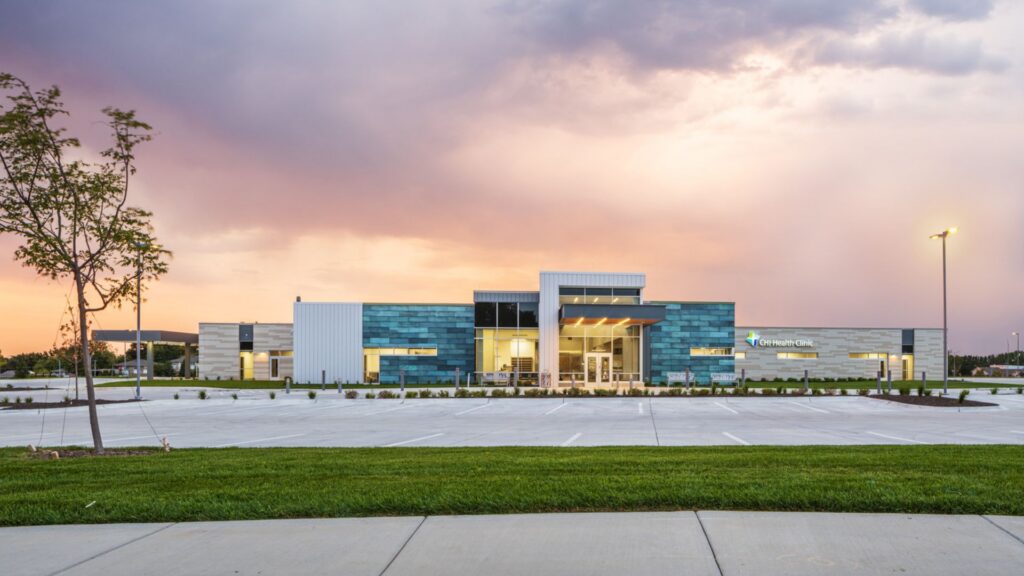
The model continued to attract popularity throughout the 2010s: A 2013 publication in Health Facilities Management Magazine highlighted the bedless hospital as a “sign of the times,” and a 2016 PBS report brought widespread attention to bedless hospitals by broadcasting their same-day treatment of patients. The COVID-19 pandemic further accelerated the shift toward alternative care models. In 2020, the Centers for Medicare & Medicaid Services (CMS) introduced the “Hospital Without Walls” program to expand care options.
So, why the shift? U.S. hospitals, especially in urban areas, have moved quickly toward a bedless model due to several key factors.
Patient-Centric Convenience
Modern patients demand convenient, high-quality outpatient services and minimally invasive procedures. Outpatient facilities, especially those with advanced amenities like interventional suites and emergency departments, provide high-quality care with the benefit of a shorter stay and reduced exposure to the risks of a traditional hospital environment, such as infections.
Technological Integration
The continued advancement of technologies such as telehealth, telemedicine and remote patient monitoring is enabling patients to receive the same level of high-quality care traditionally delivered in a hospital — without prolonged hospitalization. The success of the bedless hospital model is rooted in this shift, focusing on delivering acute and post-acute care through shorter, more efficient facility stays while allowing patients to spend more of their recovery time at home with appropriate clinical oversight and home-based care. Complementary innovations, including robotic surgery, advanced diagnostics and increased automation, further support this model by improving outcomes, enhancing efficiency and reducing the need for inpatient beds.
The use of AI and big data analytics is also on the rise, facilitating smarter decision-making and predictive models for patient care. This enhances the hospital’s operational efficiency and optimizes resource allocation in a bedless environment.
Cost-Effective Care
By eliminating the high operational costs associated with maintaining inpatient beds, outpatient facilities offer a lower-cost setting for a broad range of services. These value-based care models encourage providers to shift services to more affordable settings and help to manage rising healthcare expenses.
Speed to Market
Bedless hospitals also offer faster speed to market due to reduced programmatic complexities, streamlined regulatory and licensing path and more flexible site and zoning options. This decentralized model allows providers to meet community demand for care more quickly than a traditional hospital.
Advanced Community Access and Amenities
Outpatient facilities expand access to care in communities, especially with features like FSEDs that can serve as a convenient and more affordable alternative to traditional hospital ERs.
Despite lacking beds, outpatient facilities often feature the same amenities as traditional hospitals, including operating rooms, infusion suites and emergency departments.
Upward Market Trajectory
The market reflects this ongoing tectonic shift: The Bedless Hospitals Market was valued at $3.68 billion in 2024 and is forecast to grow at a compound annual growth rate of 10.5% from 2026 to 2033, reaching $9.15 billion by 2033. This robust growth forecast is a clear indicator that the industry is rapidly moving toward decentralized, efficient and technologically enabled care delivery.
The Shift From Acute Hospital Setting to Freestanding Specialized Care
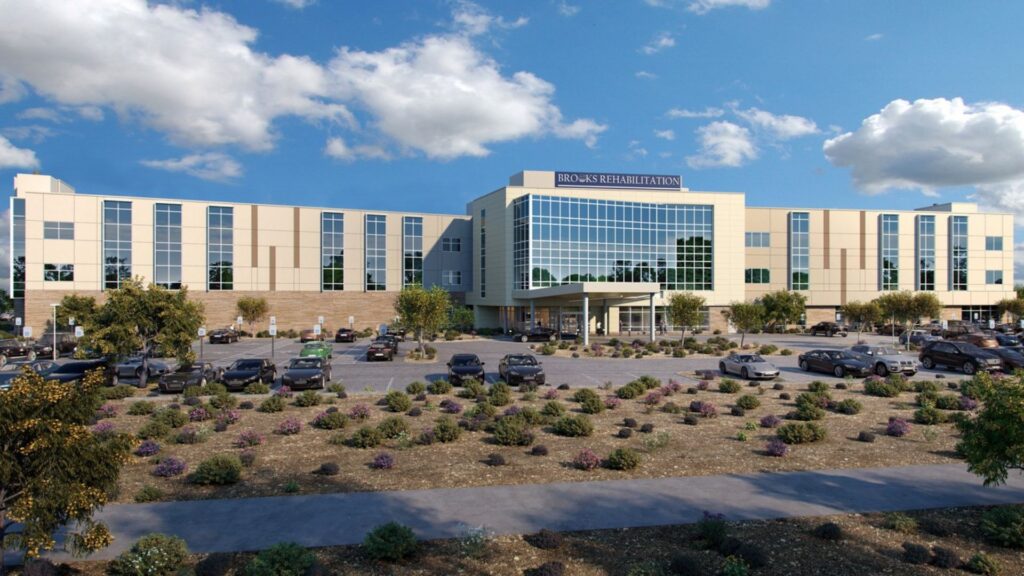
The demand for specialized outpatient environments is also evident in the growth of freestanding Inpatient Rehabilitation Facilities (IRFs). As acute care hospitals increasingly look to optimize their space and resources, many are downsizing or eliminating their intensive rehabilitation bed units.
Physicians are now more likely to refer post-traumatically injured patients to a dedicated freestanding IRF, which is designated as a hospital and held to a higher standard of care than a skilled nursing facility (SNF). IRF patients, often seniors (65+) with complex, non-chronic needs, have an average length of stay of around 13 days, and they benefit from close medical supervision by a physician and rehabilitation team.
The usage of IRF services will continue to rise as the population ages. The rise in new or renovated freestanding facilities, even as hospital-based units decline, proves this fact.
Looking Ahead
The evidence is clear: The outpatient revolution is not a passing trend but a fundamental, irreversible shift in healthcare delivery. The sustained growth of this sector, exemplified by models like bedless hospitals and IRFs, is driven by a powerful confluence of patient demand, technological innovation and financial necessity.
As acute care hospitals continue to optimize their resources, the demand for these specialized, dedicated environments will only rise, particularly with an aging population.
The future of healthcare design lies in this commitment to decentralization and efficiency. By embracing innovative, adaptable and technologically enabled facilities, the industry is paving the way for a healthcare ecosystem that is more accessible, resilient and, ultimately, better positioned to meet the evolving needs of the communities it serves.
Patrick McCurdy, AIA, ACHA, NCARB, is a Partner and the Regional Healthcare Practice Leader for Hoefer Welker. Travis Leissner, AIA, is Principal and Director of Strategy for Hoefer Welker.