
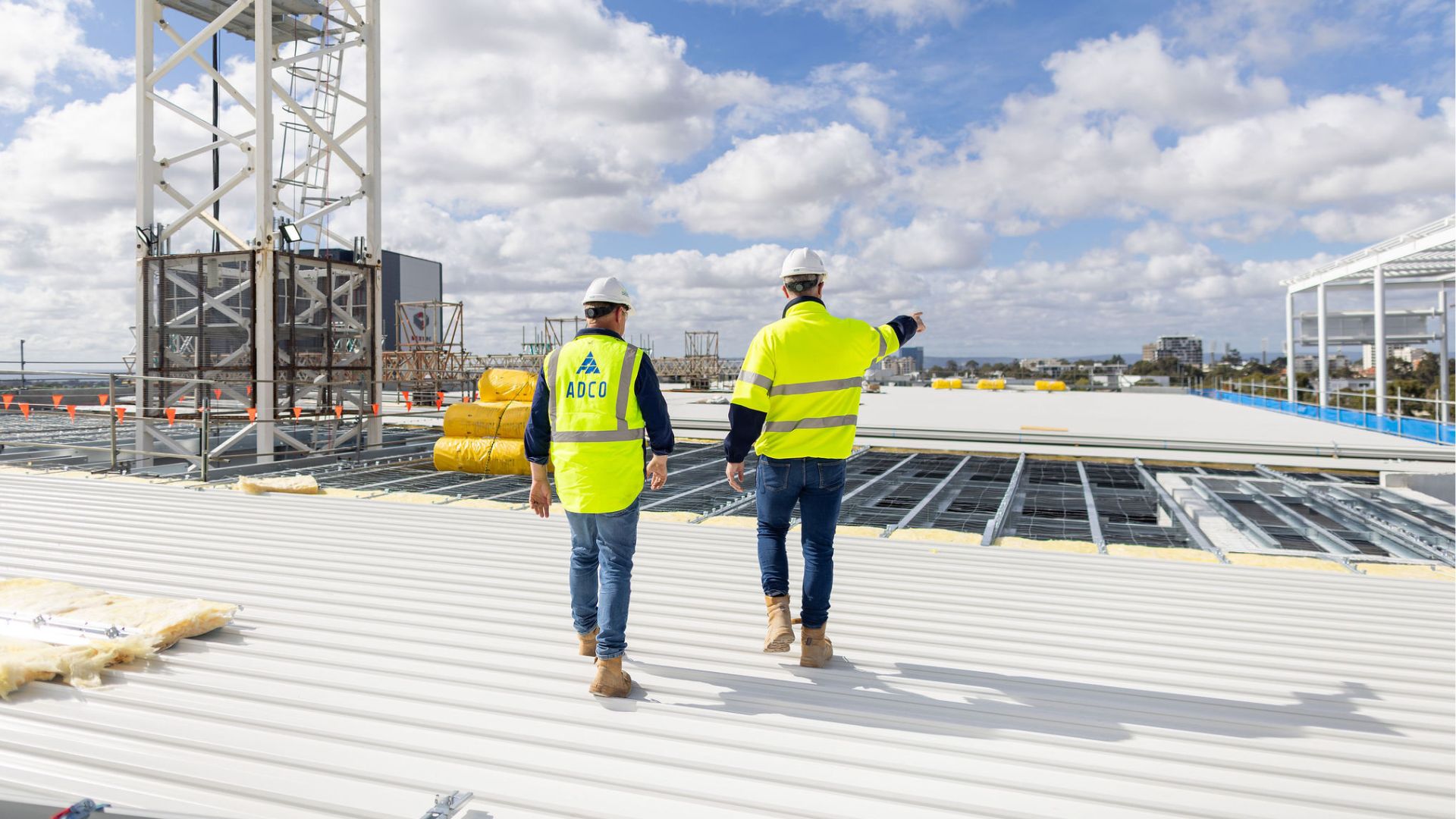
Healthcare construction rarely struggles with a lack of safety planning. Where it can fall short is keeping those plans aligned with what is actually happening on site. | Photo Credit: Courtesy of Hammertech
By Andrew Barron
Healthcare construction rarely struggles with a lack of safety planning. Where it can fall short is keeping those plans aligned with what is actually happening on site.
Hospital projects take place in live, highly constrained environments. Work is phased. Access windows are limited. Infection control requirements shift. Specialist trades operate in confined spaces while clinical operations continue nearby. These conditions are not unique to healthcare, but they do create environments where site conditions can change quickly and safety assumptions need regular revisiting.
Insights from the Safety at Scale 2025 report draw on analysis of more than 75,000 safety incidents recorded in HammerTech between 2018 and 2024 across commercial, industrial, and civil construction. Rather than focusing on isolated events, the report looks at patterns visible at scale, examining when injuries are recorded, how injuries occur, and how reporting practices evolve over time.
While drawing from construction projects across sectors, its insights are relevant to any complex, live environment where work is tightly coordinated and conditions can change quickly, including projects delivered within occupied, operational facilities such as hospitals.
What Timing Data Should Prompt Teams to Ask
The value of the 9 a.m. injury peak lies less in the number itself and more in the questions it raises. What activities are underway as the site moves from planning into physical work? Are crews fully mobilized? Are supervisors present and engaged? Do conditions match what was anticipated during pre-start planning?
On complex construction projects like healthcare, the start of the workday can involve multiple crews mobilizing at once, concurrent activities beginning, and adjustments to sequencing or access. Work continues, but conditions may already differ from earlier assumptions.
The report is explicit that timing data does not establish causation. It is a lens for inquiry, not a diagnosis.
How Injuries Actually Happen on Site
Beyond timing, the findings touch on how injuries occur. Across the six-year dataset, three injury mechanisms account for more than 60 percent of all recorded injuries: hitting objects with part of the body, being struck by moving objects, and falls on the same level.
These mechanisms appear consistently across regions and sectors, even though the circumstances behind them vary by project context. The report highlights that understanding how injuries occur can provide a stronger foundation for prevention than focusing on injury outcomes alone.
In healthcare environments, these mechanisms can surface during routine tasks performed in constrained spaces, like those where temporary controls are introduced to manage infection risk alongside construction activity.
Temporary barriers, equipment, and services may restrict movement. Floor coverings, hoses, cords, and access routes may be installed and removed as work progresses. Specialist trades may be working concurrently in tight areas.
These hazards are not unique to healthcare. They reflect conditions common to complex construction projects where site layouts and workflows evolve as work progresses.
When Site Conditions Evolve
Most safety systems rely on structured checkpoints such as pre-task plans, permits, daily briefings, and inspections. These processes are essential, but they are frequently treated as fixed moments rather than tools that adapt as conditions change.
The report’s timing insight points to a potential gap between when plans are reviewed and when work begins in earnest. On complex, live construction projects, conditions can change quickly once crews are on the tools.
Tasks may run longer than expected. Access routes may be adjusted to protect patients or maintain operations. When controls are not revisited as work evolves, they may no longer reflect the reality on site.
That gap is rarely intentional. It is simply where risk can accumulate if assumptions go untested.
How Stronger Teams Use These Insights
Safety at Scale does not prescribe solutions, but it surfaces opportunities for action. Teams that perform well on complex projects tend to treat data as a prompt for reflection rather than a scoreboard.
Timing insights can be used to reinforce supervision and communication as work begins. Injury mechanism data can help teams understand where controls are most likely to matter. Reporting trends can make it easier to spot issues early, before they escalate.
It also highlights a broader trend over time. Between 2018 and 2024, the injury-to-incident ratio among HammerTech users declined by 23 percent, even as incident reporting increased. Findings don’t claim causation but suggest that greater visibility into lower-severity events and near misses may support earlier intervention.
On healthcare projects, this approach can be supported through close coordination with facility stakeholders, such as clinical teams and infection control leads who influence access, sequencing, and timing of work.
When clinical operations influence access or sequencing, early alignment can help reduce late-stage changes that introduce unmanaged risk.
Seeing Risk Before It Becomes Injury
Healthcare construction brings together conditions that demand constant coordination. Live environments, tight schedules, and competing priorities are part of the work. What is avoidable is treating risk as static on site.
Safety at Scale shows that paying attention to when injuries peak, how injuries occur, and how incidents are reported can help teams focus attention where it matters most.
When safety processes evolve alongside changing site conditions, teams are better positioned to protect workers, patients, and facilities without slowing delivery.
Andrew Barron is Chief Product Officer for HammerTech.