

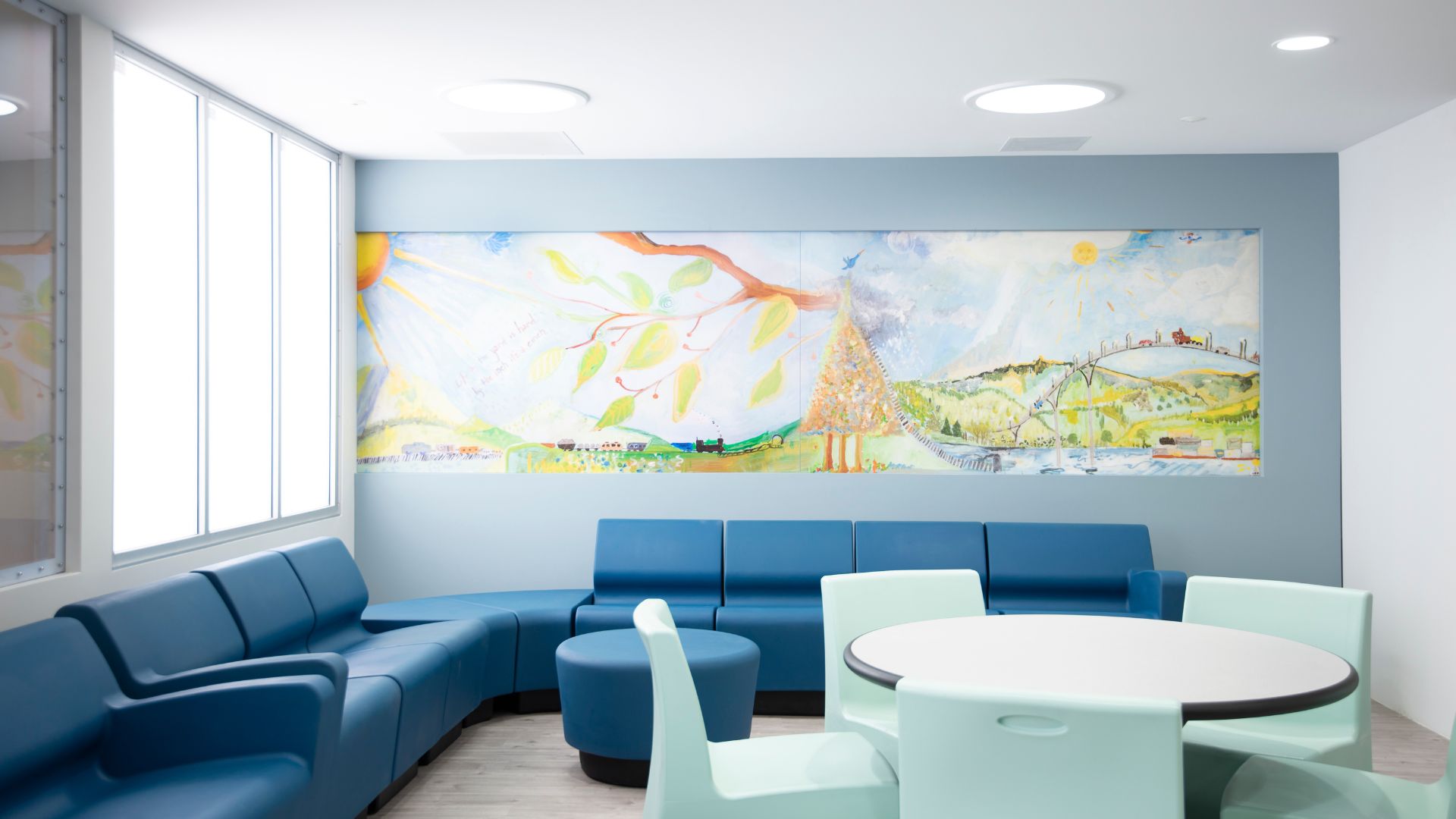
The 37,000-square-foot unit serves adults, providing both geriatric psychiatric care and dual diagnosis (psychiatry/addiction) services. This two-project, multi-phase expansion has also improved facility workflow, enabling them to accommodate more patients. | Photo Credit (all): Kenall, Johnson & Urban
By Patricia Rizzo and David Goldberg, PE
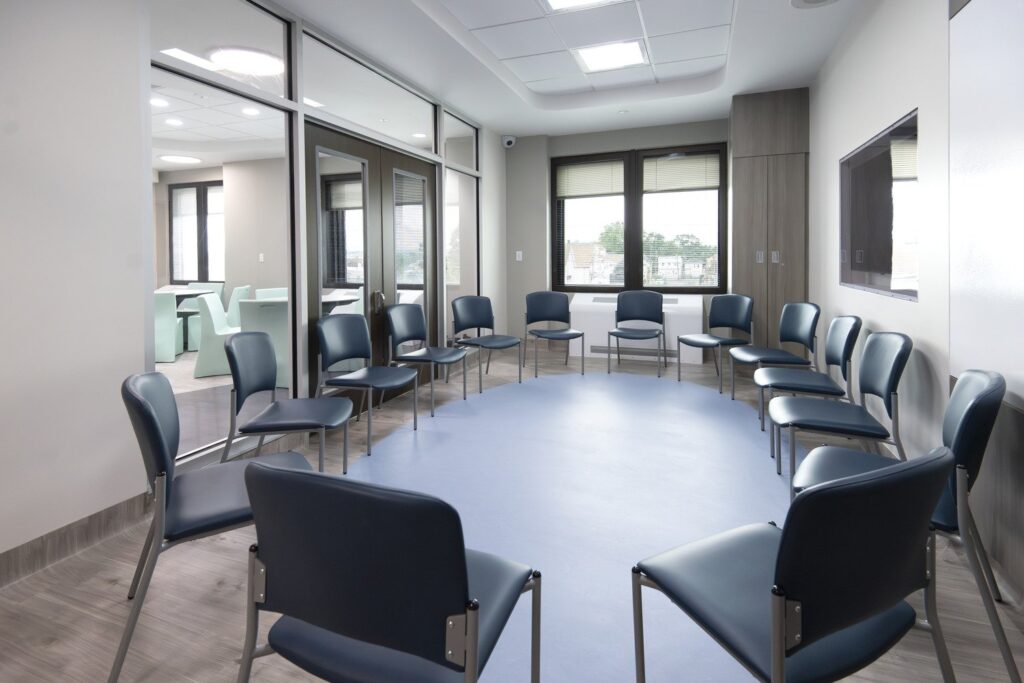
According to the American Society for Health Care Engineering (ASHE), nearly half of the specialty hospital projects under construction over the next three years will be behavioral health centers or psychiatric hospitals.1 In these facilities, safety and healing are of utmost importance.
Behavioral health facilities have come a long way from the sterile, institutional hospitals of the past. Architects and engineers collaborate with providers to meet the unique needs of their patient population. Purposeful interior design can have positive effects on mental and behavioral health. Offering patients autonomy in their surroundings – like the ability to control lighting, and heating, ventilation, and air conditioning (HVAC) systems – may help regulate their sleep, which could reduce stress levels.
Best practices for treating and housing patients with mental illness have shifted from custodial care to person-centered recovery. Understanding the role environmental factors and ambient comfort play in behavioral health is key to improving outcomes.
Ensuring Safety
Federal and The Joint Commission policies about patient safety, and accompanying considerations about security, are an imperative driver for facility design and operations. To that end, lighting for these spaces must be sufficiently robust to support patient and staff safety, while still providing suitable illumination and comfort.
Unique Needs of Behavioral Health Settings
As the design of behavioral health environments continues to evolve, lighting must benefit the diverse needs of populations across a multitude of spaces – from EmPATH units (Emergency Psychiatric Assessment Treatment and Healing), which are behavioral health units embedded in hospital emergency departments, sharing ED resources while providing a calm, therapeutic environment – to outpatient and residential facilities treating a range of diagnoses. Each facility has lighting requirements that are unique to the diverse population it serves. In addition to supporting patients’ health and wellbeing, these facilities must also ensure the safety of patients, caregivers, and visitors. Luminaires with polycarbonate lenses, and tamper-resistant fasteners and frames discourage damage to, and weaponization of, the luminaire. Ligature-resistant lighting– from luminaires to wall switches – removes hard edges, corners, and entry points from the product, thereby reducing the opportunity for self-harm.
Healthcare facilities are difficult places for patients to maintain proper sleep hygiene. The lack of sleep, in many cases, can negatively impact healing, thereby lengthening the time a patient spends in the facility. Techniques to support circadian entrainment, such as modulating intensity from day to night via dimmable lighting, or including the enhanced features offered by tunable white or biodynamic lighting, can help preserve normal sleep/wake cycles and maintain hormonal balance.
In addition to providing daylight and views to nature, recent studies on health, performance, and comfort suggest that the ability to tune the color temperature of light – or even introduce color changing from pastels to saturated colors – based on application, need, or occupant preference – yields significant benefits. Personal control over room lighting can positively influence mood, and support a patient’s feeling of independence, perhaps the most important benefit of all.
Physical Comfort Enhances Emotional Equilibrium
Studies indicate that extreme temperatures can exacerbate stress and anxiety, while a comfortably maintained environment fosters calmness and mental clarity. 2 In addition to temperature, the quality of the air is important. Poor ventilation can lead to a build-up of pollutants and allergens, contributing to cognitive fog, lethargy, and even long-term neurological impacts. In contrast, well-ventilated spaces with optimal air quality can enhance focus, boost mood, and even improve sleep.3
Similar to lighting, HVAC equipment in patient areas needs to be ligature- and tamper-resistant, preventing any potential for self-harm. In addition to HVAC, the electrical systems are another vital requirement. Like other healthcare environments, behavioral health facilities have unique electrical needs, including emergency power backup systems. Compliance with all the mechanical, electrical, and plumbing (MEP) requirements ensures the facility operates efficiently, meets regulatory standards, and promotes the well-being of patients and healthcare professionals.
Excessive noise can be stressful for patients and hinder their recovery process. Strategic placement of loud MEP equipment can help create a quieter environment, promoting healing and rest.
Learn more about these best practices in action at the Carrier Behavioral Clinic at Raritan Bay Medical Center in Perth Amboy, N.J., read the full article in the Annual Issue of Healthcare Construction + Operations News.
Patricia Rizzo is Senior Healthcare Product Marketing Manager for Kenall Manufacturing and may be reached at patricia.rizzo@kenall.com.
David Goldberg PE, is Senior Electrical Engineer, Johnson & Urban and may be reached at DGoldberg@johnsonurban.com.