

By Kim Sterling
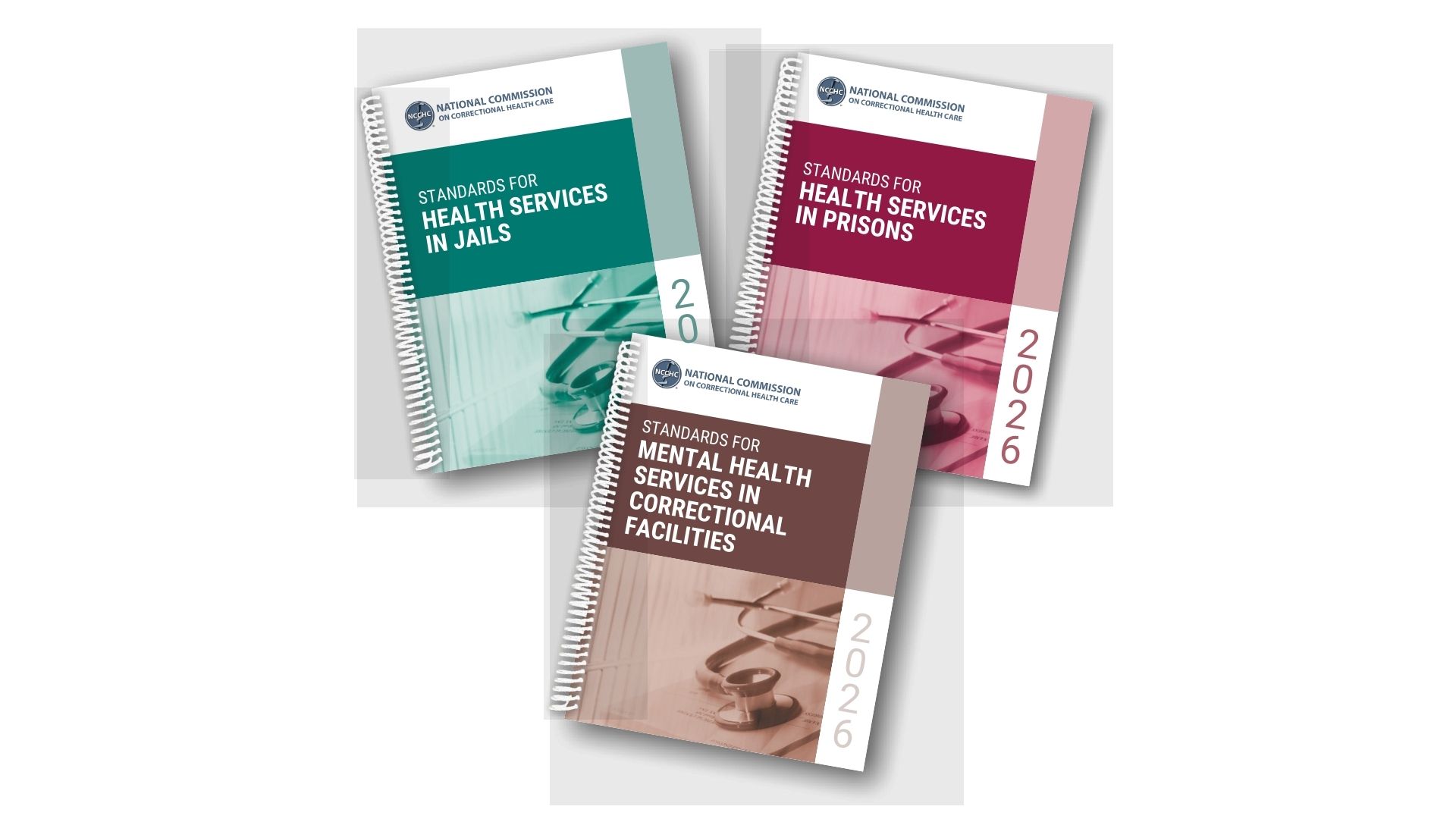
The National Commission on Correctional Health Care (NCCHC) has released the 2026 Standards for Health Services in Jails and Prisons and Standards for Mental Health Services in Correctional Facilities, setting new benchmarks for safe, effective and coordinated care in correctional environments.
The National Commission on Correctional Health Care (NCCHC) has released the 2026 Standards for Health Services in Jails and Prisons and Standards for Mental Health Services in Correctional Facilities, setting new benchmarks for safe, effective and coordinated care in correctional environments. Together, these editions reflect a major shift toward equity, accountability and practical collaboration between health and custody professionals.
“These revisions reflect our commitment to continually advancing correctional health care,” said Amy Panagopoulos, MBA, RN, CCHP, NCCHC vice president of accreditation and chief nursing officer. “The 2026 Standards integrate current knowledge, emphasize equity and access, and provide facilities with tools to deliver safe, ethical and constitutionally appropriate care.”
Key Enhancements That Matter to Custody
While written for health services, many updates directly impact daily operations, risk management and staff safety. Custody professionals play a vital role in implementing these changes, especially in communication, documentation and early intervention.
- Stronger Focus on Suicide Prevention and Mental Health Coordination
The 2026 editions expand expectations around suicide prevention, including monitoring of individuals at risk of suicide or self-harm, and new follow-up requirements by a qualified mental health professional (QMHP) once safety precautions are lifted. The use of closed-circuit television is recognized as a supplemental tool but not a substitute for direct observation — a key point for custody staff involved in housing and supervision decisions.
In addition, both manuals highlight interdisciplinary communication among custody, medical and mental health teams, ensuring that risks are identified early and addressed through coordinated response. - Clearer Documentation and Accountability
Every standard now includes a new Supporting Survey Documentation section, outlining the recommended documentation records facilities should maintain. For custody operations, this reinforces the importance of accurate logs, observation records and participation in administrative reviews following incidents such as suicide attempts or deaths in custody. A formal psychological autopsy is now required within 90 days, underscoring the shared responsibility of health services and custody operations in understanding contributing factors. - Training and Role Clarification
Custody staff receive additional support through expanded health training requirements, which cover suicide prevention, substance use disorder, mental health awareness and emergency response. The 2026 Mental Health Standards also call for comprehensive orientation programs for mental health staff, helping clinical teams better understand security procedures and the realities of the correctional environment — bridging the gap between custody and mental health care. - Updated Procedures That Improve Safety and Reduce Risk
Several operational updates aim to prevent adverse events and improve daily efficiency:- Receiving screenings are required within six hours of admission.
- Initial health assessments are mandatory for all new intakes.
- Grievance logs and CQI reviews are now required to track trends and prevent escalation.
- Restrictive housing standards introduce increased mental health rounds and revised contact frequency, helping reduce isolation-related risks.
- Infection control and chronic disease management requirements have been strengthened, supporting safer environments for staff and those in custody alike.
- Modernized Language and Equity in Care
Outdated terminology such as “inmate with mental illness” has been replaced with person-first language (“individual receiving mental healthcare”). A new standard, Gender-Affirming Health Care Services, provides clear guidance for multidisciplinary care that supports dignity while maintaining safety and order.
Digital Access and Implementation
For the first time, the Standards are available in a digital format for single-user licensing, enabling searchable, annotated use in staff training and compliance programs. Facilities seeking NCCHC accreditation must comply with the Jail and Prison Standards beginning January 1, 2026, and the Mental Health Standards by April 1, 2026.
Shared Goals: Safety, Compliance and Quality
“These Standards will help facilities improve patient care, avoid adverse events, and enhance safety for staff and those incarcerated,” said Wendy Habert, MBA, CCHP-A, NCCHC Director of Accreditation.
For custody leaders, understanding and supporting these updates is not only about compliance — it’s about risk reduction, improved communication and safer operations for everyone inside the facility.
What Officers Need to Know About the 2026 NCCHC Standards
The 2026 NCCHC Standards for Health Services in Jails and Prisons and Mental Health Services in Correctional Facilities introduce important updates that affect both healthcare/mental health services and custody operations. Key changes include expanded suicide prevention protocols, enhanced documentation and communication requirements, and new training expectations for custody staff. Custody staff will see stronger collaboration with mental health and medical teams, clearer procedures for housing and monitoring at-risk individuals, and greater focus on post-incident reviews and risk reduction. The standards also introduce trauma-informed and person-first language, emphasizing respect and safety for everyone inside the facility. Together, these updates strengthen accountability, improve staff preparedness, and support safer, more coordinated correctional environments.
This article was originally published in Healthcare Constrution + Operations News’ sister publication, Correctional News, which features healthcare facilities and policy within the justice and corrections industry.